.png?width=128&height=85&name=Logo%20(3).png)

Industrial cleaning allows no compromise. Whether it involves degreasing heavy machinery, cleaning building façades, or sanitizing food-processing facilities, the equipment used determines not only the quality of the results but also the profitability of your operations. Choosing the right industrial pressure washer for your specific needs is a strategic decision that requires a rigorous analysis of technical specifications.
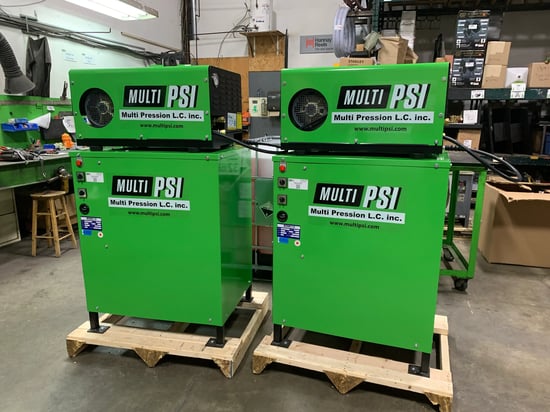
This detailed guide will walk you through the essential criteria—from powertrain types to flow rate specifications—to ensure a durable and high-performing investment with Multi PSI.
Table of contents
- The importance of choosing the right industrial pressure washer
- Flow rate (GPM) vs pressure (PSI): understanding real power
- Cold water vs hot water pressure washers: which application?
- Types of power sources: electric, gasoline, or diesel
- Drive systems: direct drive vs belt drive pumps
- Industrial materials and component durability
- Essential accessories to maximize efficiency
- Safety and compliance considerations
- Preventive maintenance to extend service life
- Comparison table of washer types
- Next steps
- Frequently Asked Questions (FAQ)
The importance of choosing the right industrial pressure washer
Purchasing industrial cleaning equipment represents a significant investment. Unlike residential units, industrial pressure washers are designed to operate several hours a day, every day. A poor choice can lead to costly repairs, excessive energy consumption, and major productivity losses.
Choosing a pressure washer from an expert like Multi PSI ensures that the machine’s core components (pump, engine, frame) are engineered for the most demanding environments. Durability is the key priority here.
Flow rate

Overall cleaning power
Cold or Hot pressure washers : which application ?
Cold water high-pressure washers
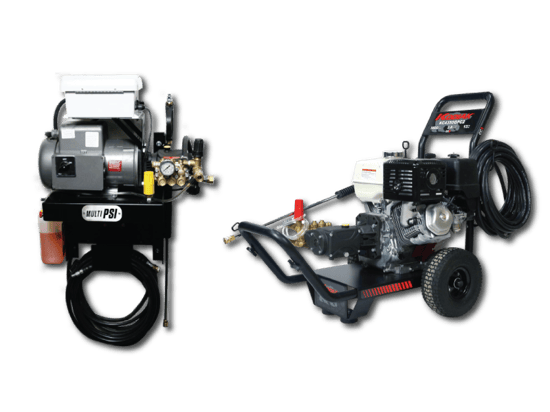
These are ideal for removing dirt, sand, or peeling paint. They are more compact, less expensive, and easier to maintain. This is the logical choice for construction sites or basic fleet cleaning.
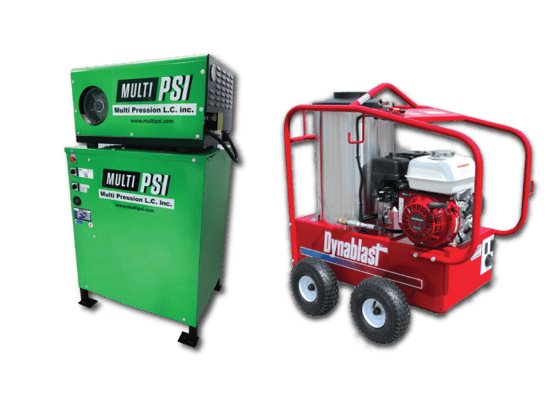
Hot water high-pressure washers
Types of power sources : electric, gasoline or diesel
The power source is a key factor in mobility and jobsite use.
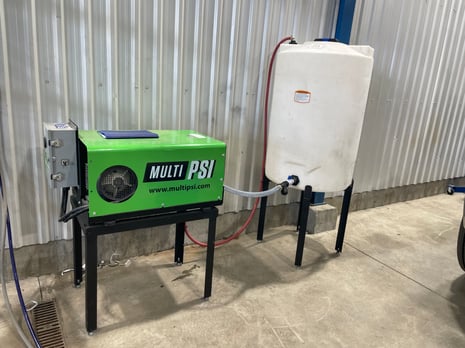
Ideal for indoor use, they produce zero carbon emissions and are very quiet. However, they require a stable power supply (often 230V or 600V for industrial models).
Gasoline and diesel engines
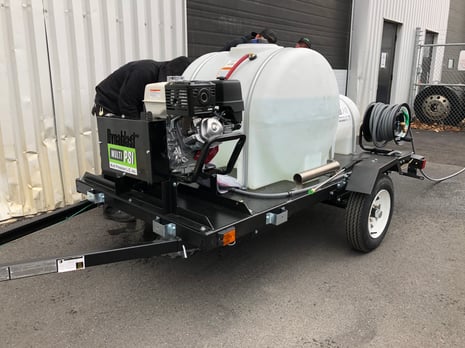
These models offer complete autonomy. They are preferred for outdoor work or remote sites. Engines from trusted brands such as Honda or Kohler ensure long-term reliability, which is essential to avoid downtime.
Drive systems : direct drive vs belt drive pumps
There are two main ways to connect the engine to the pump.
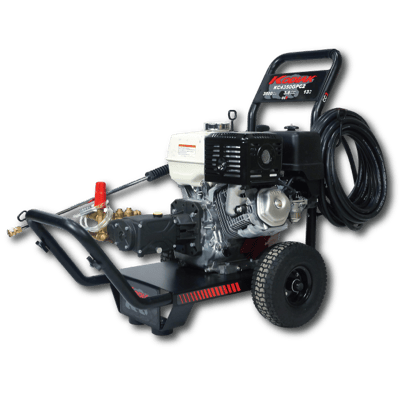
Direct drive
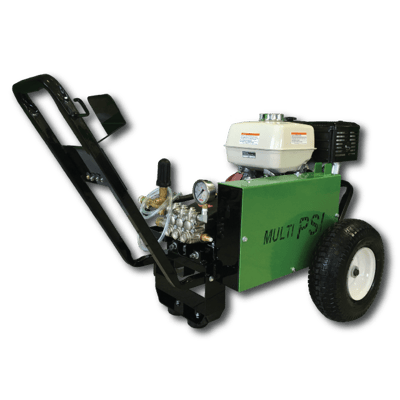
Belt drive
Industrial materials and component durability
A real industrial pressure washer is defined by the quality of its materials. Brass pump heads are standard because they resist corrosion better than aluminum. Solid ceramic pistons are also preferred for their thermal resistance.
The frame should be made of heavy-duty steel or aircraft-grade aluminum with a powder-coated finish to prevent rust caused by chemical exposure and constant moisture.
Essential accessories to maximize efficiency
- Rotary nozzles (Turbo nozzles) : Combine the power of a concentrated jet with the coverage of a wide spray.
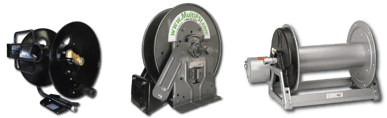
- Hose reels : Essential to protect hoses from vehicle damage and prevent tripping hazards.
- Foam cannons : For precise application of industrial detergents such as MPSI-5011.


To discover the Top 10 most requested accessories, click HERE.
Safety and compliance considerations
Preventive maintenance to extend service life
Comparison table of washer types
| Feature | Electric Mobile | Gasoline Portable |
Stationary Hot Water |
| Ideal use | Indoor - Workshop | Construction - Outdoor | Food industry - Garage |
| Pressure (PSI) | 1000 to 3000 | 2500 to 4000 | 2000 to 3500 |
| Flow rate (GPM) | 2 to 4 | 3 to 5 | 4 to 10 |
| Noise | Low | High | Moderate |
| Mobility | Limited by cord | Excellent | Fixed |
The table above compares the three most common configurations, helping you quickly identify which equipment category best matches your daily operational needs.
Next steps
Choosing the right industrial pressure washer is an investment in your company’s efficiency. By prioritizing flow rate (GPM), selecting the proper drive system, and choosing a power source suited to your environment, you can significantly reduce long-term operating costs.
At Multi PSI, we understand that every cleaning challenge is unique. We invite you to consult our experts for a customized solution.
Frequently asked questions (FAQ)
What PSI is required for industrial use ?
Why is my pressure washer loosing power?
Can bleach be used in a pressure washer ?
Bleach should never pass directly through the pump.
What is the lifespan for an industrial pump?
With regular maintenance and belt-driven operation, a high-quality pump can last over 10 years in professional use.
Should I choose a Honda engine ?
Honda is a global benchmark for reliability. GX engines are an excellent choice for ensuring jobsite uptime.
How do I prevent freezing in winter ?
What type of hose is most durable ?
What is the difference between axial and triplex pumps?
Why choose Multi PSI for my equipment ?
Can a cold water pressure washer be converted intro a hot water unit ?
Author: Multi PSI has been an expert in high-pressure washing equipment for over 25 years. As an equipment distributor, we also offer mobile and workshop repair services. We are recognized for our expertise in custom projects, including washing platforms and trailers, as well as the installation of washing systems with reels, poles, or rails.
Updated on May 1, 2026