.png?width=128&height=85&name=Logo%20(3).png)

Using a high-pressure washer, also referred to as a power washer or high-pressure cleaner, is one of the most effective methods for cleaning, degreasing, and maintaining industrial equipment, vehicle fleets, and exterior surfaces. However, the force generated by this equipment requires constant care. Improper handling can quickly lead to severe personal injury, costly equipment damage, or operational inefficiencies.
In this comprehensive guide, the expert team at Multi PSI walks you through operating a pressure washer step-by-step. Whether you use an indoor electric unit or a standalone gas-powered system in the field, you will discover key safety practices, optimal technical settings, and proper procedures to extend the lifespan of your equipment.
Table of contents
- Fundamental Safety Rules and Essential Equipment
- Pre-Start Preparation and Technical Inspection
- How to Choose the Proper Nozzle for Your Surface
- Washing Techniques and Lance Handling
- Indoor vs. Outdoor Cleaning Safety Rules
- Shutdown, Pressure Relief, and Storage Procedures
- Summary Table of Washing Parameters
- Pressure Washer Operation FAQ
Fundamental Safety Rules and Essential Equipment
Operating a pressure washer requires careful attention to ensure safety and achieve optimal cleaning results. The force of a high-pressure water jet can easily slice through soft materials, propel debris at high speeds, or cause severe skin lacerations.
Before turning on your equipment, always read the user manual provided by the manufacturer. Every model has specific features, operating pressures, and instructions. At Multi PSI, we make accessing technical information simple by including a printed operator manual with every piece of equipment, ready to read as soon as you receive your machine.
Personal Protective Equipment (PPE) is mandatory before starting the machine:
- Safety Eyewear: Wear sealed safety glasses or a full face shield to protect against water splashes, flying debris, and dislodged dirt.
- Heavy-Duty Gloves: Wear sturdy rubber gloves to ensure a firm grip on the spray gun handle.
- Footwear: Wear non-slip footwear or steel-toe work boots.
- Apparel: Wear long pants made of durable fabric to protect your legs from flying debris.
Warning: It is strictly forbidden to point the water jet at people, animals, or yourself. High pressure can cause immediate, severe injuries. To maintain high occupational health and safety standards, you can consult recommendations from the Commission des normes, de l'équité, de la santé et de la sécurité du travail (CNESST).
Pre-Start Preparation and Technical Inspection
Thorough preparation before startup prevents premature wear on the high-pressure pump. The primary cause of pump failure is dry running or a lack of water supply.
Connect the Supply: Attach your garden hose to the machine's water inlet. Ensure that your water supply flow rate exceeds the required gallons per minute (GPM) rating of the pump. Turn the water supply valve on fully.
Purge the System: Before starting the engine or turning on the power switch, purge the air from the system. Hold down the trigger on the spray gun until a steady stream of water flows out without air bubbles. This step removes trapped air from the system and protects the pump from cavitation.
Initial Pointing: Always point the nozzle toward the ground before pulling the trigger for the first time. This prevents an unexpected kickback from initial system pressure.
Key Tips for Operating Your Pressure Washer:
 Read the Operator Manual: Familiarize yourself with the manufacturer's manual before use; each model possesses specific operating parameters.
 Equip Protective Gear: Always wear safety glasses, rubber gloves, and non-slip boots to guard against water spray and debris.
 Choose the Right Nozzle: Match the nozzle to the surface. Use a wide-spray nozzle for large areas and a concentrated stream for stubborn grime. Consult our Nozzle Selection Chart for guidance.
 Maintain Proper Distance: Keep a safe distance from the surface. Start further back and move closer as needed to prevent surface damage. Point the nozzle groundward before starting.
 Maintain a 45-Degree Angle: Hold the spray angle at approximately 45 degrees to prevent surface chipping and splatter back.
 Avoid Sensitive Surfaces: Do not direct high-pressure spray at fragile materials like untreated wood, glass, or sealant joints.
 Clean Top to Bottom: For vertical surfaces, always start at the top so dislodged dirt washes downward naturally.
 Watch Electrical Hazards: Keep high-pressure spray away from outlets, cables, and electrical components to prevent shock hazards.
 Use Electric Washers Indoors: Avoid gas engines in enclosed spaces due to dangerous carbon monoxide (CO) exhaust. Choose a CSA-approved electric pressure washer for indoor or garage use.
 Never Point at Living Beings: High pressure can cause severe bodily injury; never point the wand at people or animals.
How to Choose the Proper Nozzle for Your Surface
High-pressure washers come with color-coded quick-connect nozzles designed for specific tasks. Select the appropriate nozzle based on the surface material and the severity of the grime.
- Red Nozzle (0°): Extremely concentrated pinpoint jet. Reserved for heavy spot-cleaning on hard concrete. Use with extreme caution, as it can slice wood or damage masonry.
- Yellow Nozzle (15°): Narrow high-pressure spray. Effective for stripping paint, removing rust, clearing heavy grease, and cleaning construction equipment.
- Green Nozzle (25°): Versatile, multi-purpose spray ideal for general cleaning of hard surfaces, loading docks, brickwork, and concrete.
- White Nozzle (40°): Wide, gentle spray suited for rinsing delicate surfaces, windows, or vehicle bodywork.
- Black Nozzle (Low Pressure): Large-orifice nozzle designed specifically for drawing and applying soap or industrial detergents.
To select the correct orifice size based on your machine's GPM and PSI output, refer to our Nozzle Selection Chart. An incorrectly sized nozzle orifice can bog down the engine or significantly diminish cleaning efficiency. Feel free to read our dedicated article on pressure washer nozzles for further details.
Washing Techniques and Lance Handling
Proper sweeping technique ensures an even clean without streaking surfaces. Hold the gun and lance firmly with both hands to counter recoil forces when pulling the trigger.
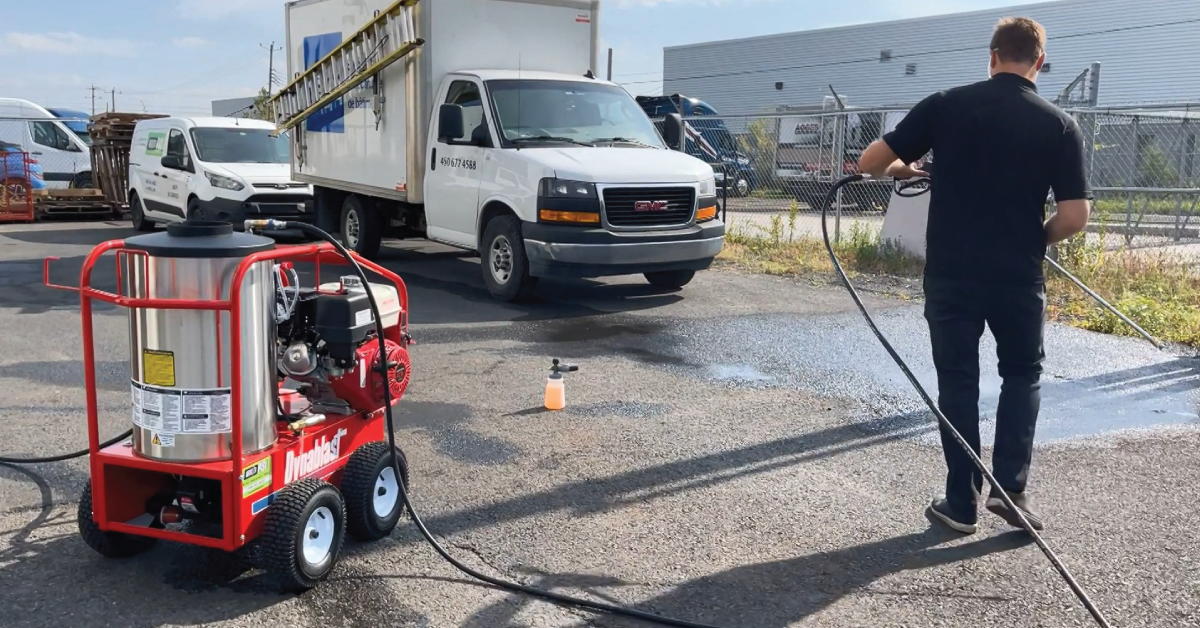
Distance: Begin spraying at a distance of about 40 to 50 cm (16 to 20 inches) from the surface, moving closer gradually if necessary. Spraying too close can cause permanent surface damage.
Angle: Maintain the lance at roughly a 45-degree angle relative to the surface. Avoid spraying perpendicular (90°), which risks gouging the substrate and splashing debris straight back at you. If you must spray at a direct angle, step back as far as possible.
Vertical Direction: When cleaning vertical walls, apply detergents and perform the initial rinse from the top down. This approach allows loosened grime to flow downward smoothly without leaving streaks.
Avoid Delicate Joints: Steer clear of untreated wood, window glass, or silicone sealant joints. For industrial compliance standards, check the CSA Group website to verify device safety certifications.
Indoor vs. Outdoor Cleaning Safety Rules
If cleaning inside a building, factory, enclosed wash bay, or garage, never use a gasoline or diesel-powered unit. Internal combustion engines release carbon monoxide (CO), a deadly, odorless, and colorless gas.
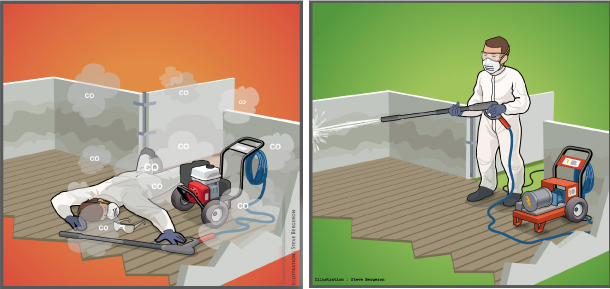
For enclosed spaces, always use a CSA-approved electric pressure washer. These units deliver full cleaning power without producing toxic exhaust emissions. Learn more about setting up your workspace by exploring our wash bay installation services.
Outdoor Operation
Gasoline pressure washers are suitable for outdoor tasks or well-ventilated outdoor shelters. Always remain mindful of nearby electrical outlets, extension cords, and power panels. Never direct high-pressure spray toward electrical infrastructure. For proper wastewater disposal guidelines, consult the Ministère de l'Environnement, de la Lutte contre les changements climatiques, de la Faune et des Parcs (MELCCFP).
Shutdown, Pressure Relief, and Storage Procedures
Shutting down your pressure washer properly is just as critical as the startup sequence. Leaving the system pressurized damages internal seals and reinforced hoses.
-
Power Down: Turn off the gasoline engine or toggle the electric motor switch to OFF.
-
Shut off Water: Close the main water supply valve immediately.
-
Relieve Pressure: Point the spray gun in a safe direction and squeeze the trigger to release all trapped pressure from the hose and pump.
-
Engage Safety Latch: Engage the trigger safety lock on the gun handle.
-
Disconnect Hoses: Disconnect both the water inlet hose and the high-pressure hose.
-
Store Properly: Coil hoses carefully without kinks or twists to protect their internal wire braiding.
If storing your machine in an unheated location over the winter, inject a dedicated pump saver/antifreeze fluid to keep frozen moisture from cracking the pump manifold, pistons, and valves. Read our detailed article on pressure washer winterization for complete steps.
Summary Table of Washing Parameters
The table below summarizes the recommended nozzle, spray distance, and spray angle based on the type of surface to be treated.
|
Surface to Clean |
Recommended Nozzle |
Recommended Distance |
Recommended Angle |
Relative Pressure |
|
Hard Concrete & Pavers |
Yellow (15°) or Green (25°) |
30 cm – 40 cm |
45° |
High |
|
Heavy Machinery |
Yellow (15°) |
25 cm – 35 cm |
45° |
Very High |
|
Truck Fleets & Trailers |
Green (25°) or White (40°) |
40 cm – 50 cm |
45° |
Moderate to High |
|
Treated Wood Patios |
White (40°) |
45 cm – 60 cm |
45° |
Low |
|
Detergent Application |
Black (Low Pressure) |
30 cm – 50 cm |
45° |
Very Low |
Frequently Asked Questions (FAQ)
What type of pressure washer should I use in an enclosed garage?
In an enclosed building or garage, you must use a CSA-approved electric pressure washer. Gas-powered models release carbon monoxide, an invisible, odorless, and deadly gas in confined spaces.
Why is it necessary to purge air before starting the pressure washer?
Purging air by squeezing the trigger before starting prevents the pump from running dry. This protects ceramic seals and pistons from overheating and cavitation damage.
How do I avoid damaging wood or paint while cleaning?
To protect delicate surfaces, use a wide 40° nozzle, maintain a minimum distance of 45 cm (18 inches), and keep a 45° spray angle during pass sweeps.
What is the purpose of the black nozzle on a pressure washer?
The black nozzle features a large orifice that drops system pressure. This pressure drop engages the downstream soap injector to draw and apply detergent.
How do I know which nozzle size to choose for my machine?
Nozzle sizing depends directly on your machine's flow rate in GPM and pressure output in PSI. Reference Multi PSI's Nozzle Selection Chart to match the exact size required for your specs.
What should I do if the high-pressure hose vibrates erratically?
Abnormal hose vibration typically indicates air trapped inside the fluid circuit or a nozzle partially clogged with debris. Purge the system or clean out the nozzle orifice with a fine needle tool.
Is it dangerous to point the pressure wand at safety boots?
Yes, never point the lance toward yourself or anyone else. High-pressure water can pierce thick leather boots, causing severe fluid injection injuries that require urgent emergency medical care.
Why should I rinse top to bottom after applying soap?
Rinsing top-to-bottom sweeps dislodged dirt and foam down toward the ground without re-soiling cleaned areas. Conversely, detergent application should be done bottom-to-top to prevent soap from running down dry surfaces, which avoids permanent streak stains on walls or vehicle bodies.
How can I find the user manual for my Multi PSI equipment?
All equipment sold by Multi PSI includes a printed copy of the operator manual in the box. It comes with your machine and details manufacturer operating guidelines and safety protocols. If you lose your copy, contact the Multi PSI team directly to request a replacement.
How do I prepare my pressyre washer for winter storage?
Before winter, draw pump-saver antifreeze into the water circuit to displace residual moisture and prevent freezing from cracking the pump housing. If you prefer professional servicing, the Multi PSI technical department offers complete winterization services for your wash equipment.
Author: Multi PSI has been an expert in high-pressure washing equipment for over 25 years. As an equipment distributor, we offer both mobile and shop repair services. We are recognized for our expertise in custom projects, including wash platforms, mobile trailers, and complete wash bay installations with hose reels, wands, and overhead rail systems.
Updated: July 27, 2026