.png?width=128&height=85&name=Logo%20(3).png)
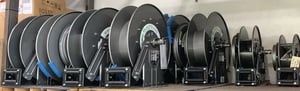
Whether you're an industry professional, a cleaning contractor, or a mechanic in a garage, properly managing your hoses or cables is essential for working efficiently and safely. Too often overlooked, the hose reel plays a key role in preventing clutter, reducing the risk of falls, and avoiding premature wear on equipment. In this comprehensive guide, we explain everything you need to know to choose the right type of reel for your needs: available types, selection criteria, specific applications, and practical tips.
Table of contents
- What is a Hose Reel?
- What Are the Different Types of Hose Reels
- How to Choose the Right Reel for Your Hose or Cable
- What Are the Applications for Using a Hose Reel
- The 5 Questions to Ask About Hose Reels
- Advantages of Using a Hannay Reels Hose Reel
- Installation Tips
- Choosing the Right Reel: A Lasting Investment
- FAQ : Questions FAQ: Frequently Asked Questions About Hose Reels sur les dévidoirs
What Is a Hose Reel?
A hose reel, also called a reel or winder, is a mechanical device designed to wind, unwind, and safely and efficiently store a hose, electrical cable, or wire. This type of equipment is particularly useful for preventing the hose or cable from dragging on the ground, which can create a tripping hazard, accelerate wear on the equipment, and make it harder to move around the work area. By keeping hoses neatly stored, a reel not only helps prevent accidents but also extends the life of your hose or cable and improves productivity.
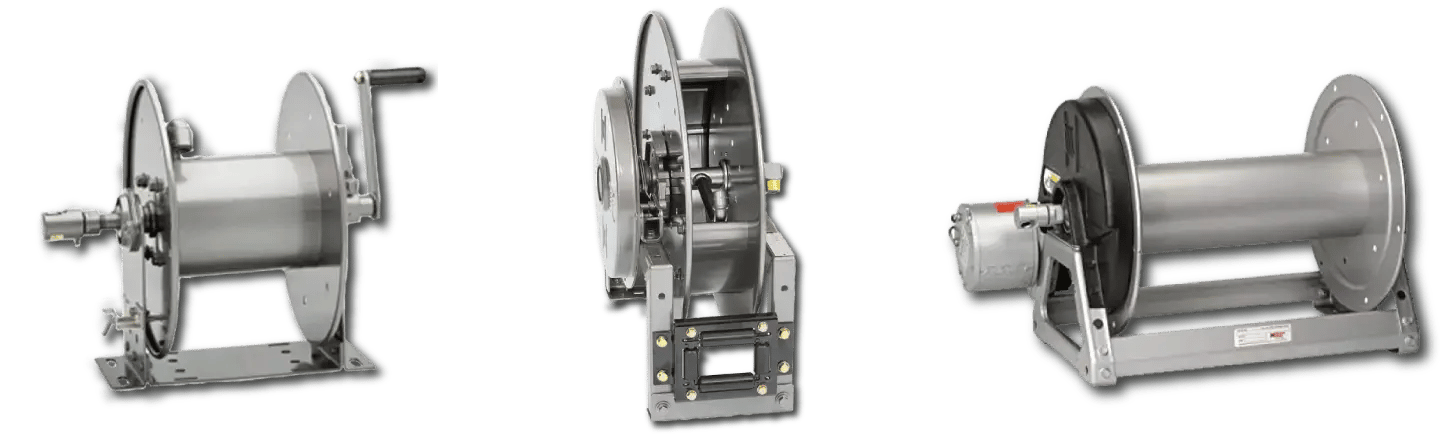
There is a wide variety of reels suited to different use cases:
- In commercial and industrial settings: Reels are often used alongside pressure washers in mechanical shops, wash centers, or industrial facilities. They are used to store wash hoses after use, protect them from being crushed, and keep the workstation clean and safe. For electricians or film studios, they're used to store electrical cabling or wiring. You'll find a wide selection in our online catalog.
- On construction sites: Electric reels are used to store extension cords in an organized way. This helps prevent snagging, cable damage, and tripping hazards in environments where safety is paramount. They're also used for very long hose lengths, over 200 feet, with a diameter of 1 inch or more, which can be too heavy for manual or even spring rewinding.
Depending on the need, reels can be manual (crank-operated), spring-driven (automatic), or even electric (motorized) at 12 or 115 volts for more demanding applications. They can be wall-mounted, ceiling-mounted, mounted on a cart, or built into mobile equipment.
In short, a hose reel is an essential accessory for any situation where a hose or cable needs to be used regularly, safely, and in an organized manner.
What Are the Different Types of Hose Reels
At Multi PSI, we recommend Hannay Reels for their ruggedness, reliability, and consistent performance, even in the most demanding industrial environments. It's a proven choice that helps improve the safety, efficiency, and durability of our installations.
Manual Reel
A manual reel is a type of winder operated by hand, typically using a crank or rotating handle, allowing the user to wind or unwind a hose, cable, or wire as needed. This simple yet effective system is widely used across many industries to manage and organize hose or cable lengths while reducing clutter and improving safety at the workstation.
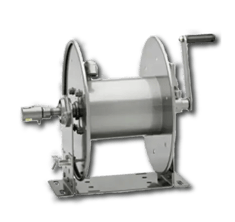
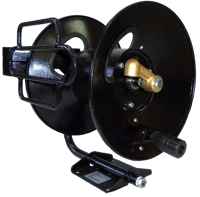
The principle behind a manual reel is based on a drum mounted on an axle that the user turns by hand. As the crank is turned, the hose winds neatly around the drum. This type of reel requires no electrical power or spring mechanism — its simplicity makes it an economical, rugged, and easy-to-maintain solution.
A manual reel is a simple, reliable, and economical solution for effectively managing hoses across a wide range of applications.
Mobile Reel
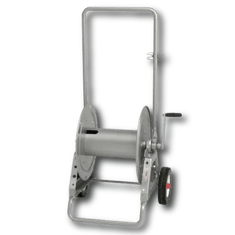
A mobile reel is a type of winder mounted on wheels, designed to make it easier to move and use hoses in different work environments. Thanks to its rugged structure and resistant casters or tires, it allows a hose to be easily transported from one point to another without dragging it on the ground, extending its lifespan. This system is especially popular in industrial, agricultural, and cleaning sectors, where flexibility and quick response are essential. Offering excellent maneuverability, a mobile reel helps maintain order and safety in the workplace while reducing physical strain on the user.
Spring-Driven Reel
A spring-driven reel, also called an auto-retracting reel, is a type of reel designed to automatically wind a hose or cable using an internal spring mechanism. This system lets the user pull out the desired length of hose, then release it so it automatically retracts and is neatly stored around the drum, with no manual effort required.
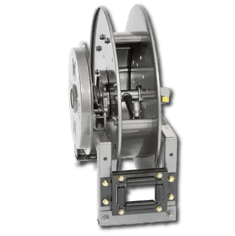
At the heart of the system is a spring, housed inside the drum or housing. As the cable or hose is pulled, the spring tensions. When the tension is released (often with a small backward tug), the spring relaxes, rotating the drum and automatically winding the hose. Some models feature a ratchet lock that allows the hose to be locked at the desired length.
A spring-driven reel is an efficient, ergonomic solution for keeping hoses and cables neatly stored, reducing handling time, and improving safety at the workstation.
Electric Reel
An electric reel is a motorized device designed to wind and unwind a hose or cable using an electric motor powered at 12 volts (DC) or 115 volts (AC). This type of reel is especially useful when hose lengths are significant, working conditions are demanding, or efficiency and ergonomics are a priority. In municipalities, they're also used for indoor or outdoor ice rinks for rink watering.
An electric reel works via a built-in motor, typically activated by a switch or push-button. The motor drives the drum to wind or unwind the hose automatically, with no physical effort required.
- 12-volt reel: often used on vehicles (trucks, trailers, self-contained platforms) powered by the battery. Ideal for mobile applications.
- 115-volt reel: used in fixed installations, powered by a standard electrical outlet. Generally offers more power and torque for intensive industrial applications.
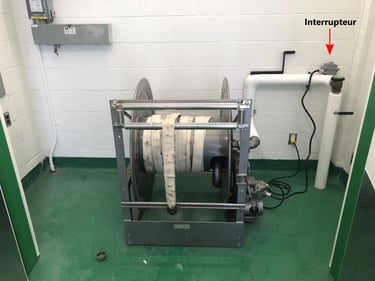
An electric reel is a high-performance, ergonomic solution for professional environments where hose or cable management needs to be fast, safe, and effortless. Whether in a 12-volt version for mobile applications or 115-volt for fixed installations, it significantly improves the efficiency of daily operations.
How to Choose the Right Reel for Your Hose or Cable
The right reel can improve your operations by increasing productivity and improving safety on the job site. Choosing the right reel comes down to a few key factors, notably what the reel will hold, how it will be used, and the application it's intended for. Below we've highlighted the most important things to consider when purchasing a reel.
Important Characteristics for Hoses and Cables
The first thing to consider is the type of hose or cable you'll be using. Size, length, bend radius, and type are essential for choosing the right reel. You need to be sure the reel will be the correct size for your equipment. For example, a hose or cable with a large inner/outer diameter and a high bend radius will require a large enough reel to accommodate its size.

Do You Need a Reel for High or Low Pressure, or for Air?
High-Pressure Reels
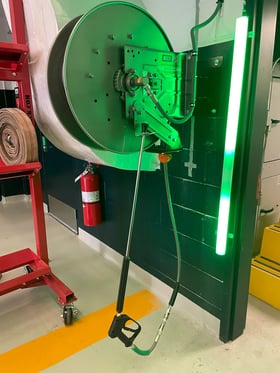
Reels designed for high pressure are specially built to withstand the high stresses generated by pressure washers. They are generally constructed from rugged materials like steel or stainless steel, and fitted with seals and fittings capable of handling pressures often up to 5000 psi or more. Whether for washing vehicles, heavy equipment, or intensive industrial use, these reels ensure safety, durability, and efficiency in demanding environments.
Low-Pressure Reels
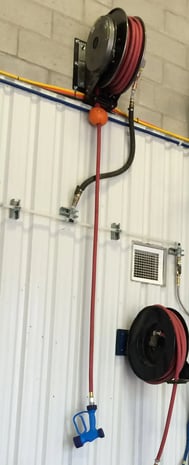
Low-pressure reels are ideal for applications like watering, rinsing, light chemical distribution, or foam systems. They're better suited to lower pressures, generally under 500 psi. This type of reel is ideal for workshops, garages, farms, or any situation where a hose needs to be kept neatly stored and easily accessible without requiring extreme pressure resistance.
Compressed Air Reels
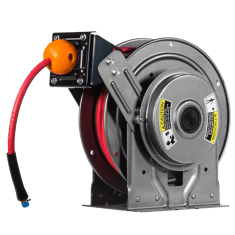
For pneumatic tools and compressed air systems, it's essential to use a reel specifically designed for air lines. These models are built to withstand air pressure while minimizing the risk of leaks and hose kinking. They allow for smooth, safe distribution of compressed air, improving tool performance while reducing hose wear. Whether in a mechanical shop or a production plant, a good air reel helps keep the workspace cleaner and safer.
Do You Need a Storage Reel or a Live Reel?
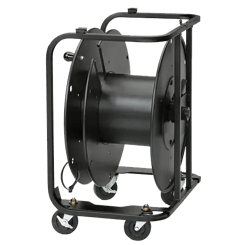
Storage reels wind your hose or cable but don't allow fluid or current to flow while it's on the reel. The hose or cable must be removed from the reel to be connected and used.
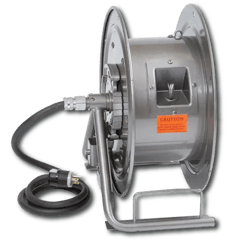
Live reels connect to your hose or cable, allowing liquid or current to pass through while it stays on the reel. If you're considering a reel for live applications, there are a few points you'll need to determine to avoid any damage to your operation.
What Are the Applications for Using a Hose Reel?
When selecting a reel, it's essential to consider the specific requirements of the environment where it will be used, particularly regarding safety, compliance with standards, and durability.
Hose Reels in the Food Industry
In the food industry, maintaining impeccable hygiene is crucial to prevent product contamination. Reels intended for these environments must be built with corrosion-resistant materials that are easy to clean. For example, using a hose with an internal stainless steel braid is an important feature, as it prevents corrosion and contamination of the fluids being handled.

Hose Reels on Construction Sites
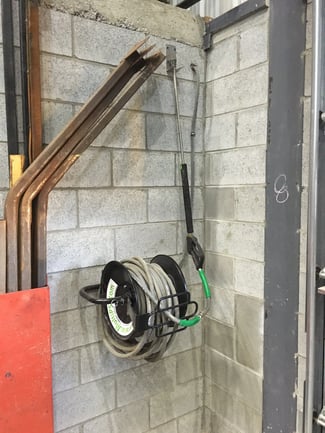
On a construction site, reels — often seen as simple accessories — actually play an essential role in smooth operations. Whether it's managing air hoses for pneumatic tools, extension cords for equipment, or water hoses for cleaning, a well-chosen reel can make all the difference.
Hose Reels in the Transportation Industry
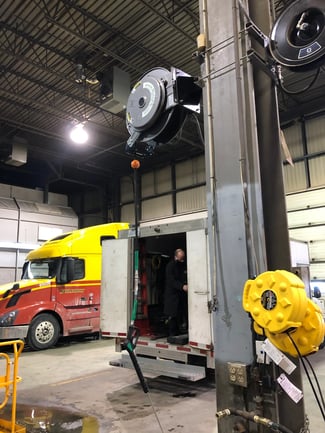
In the transportation sector — whether road transport, municipal, school, or specialized — vehicle cleanliness and facility safety are top priorities. Reels play an essential role in efficiently managing water hoses, electrical cables, or compressed air hoses, whether in a maintenance garage, a wash bay, or a mobile fleet.
Hose Reels in Cities and Municipalities
In municipal services — whether public works, parks and green spaces, infrastructure maintenance, or ice rinks — reels are indispensable equipment. They help maintain order, safety, and efficiency in often demanding, high-activity environments.

Hose Reels in Wash Trailers
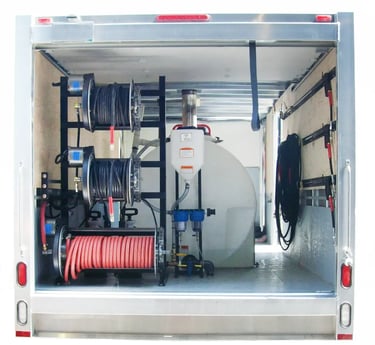
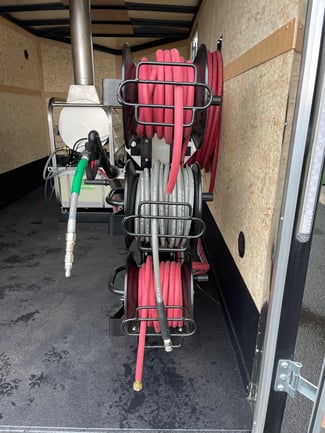
In wash trailers, whether used for cleaning heavy vehicles, machinery, buildings, or for municipal work, reels play a central role. They enable quick, safe, and professional hose deployment while maximizing the space available on board.
How and Where Will Your Reel Be Used?
The type of reel, mounting positions, and roller options will determine which reel model best suits your needs.
Winding options are available for manual, spring-driven, electric, pneumatic, or hydraulic reels. Electric winding options make winding heavy, long hoses easier and safer, while manual reels are better suited for limited-use applications or shorter, smaller hoses, and don't require wiring or connections.
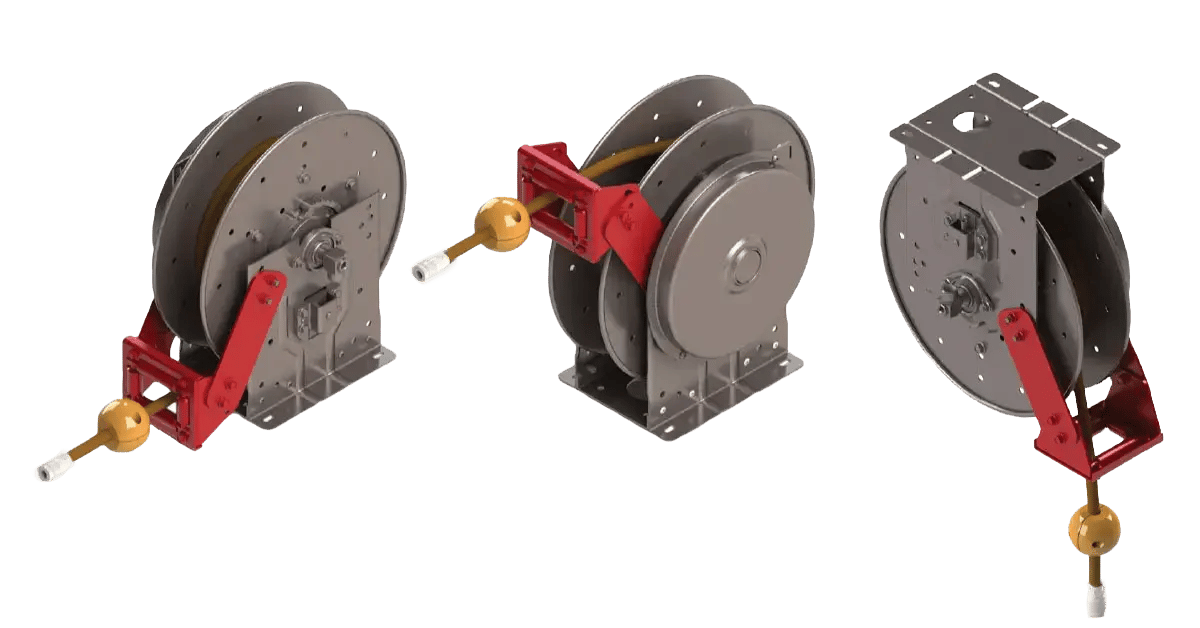
Reels can be floor-mounted, ceiling-mounted, wall-mounted, mounted in a cabinet, or mounted on a truck, and roller assemblies are available as an option to make it easier to guide the hose back onto the reel, regardless of its position.
Finding the Right Reel for the Job
Once you've gathered all the necessary information, you can begin selecting your reel. By answering a few simple questions about your needs, the selection process can guide you to the right reel. First, we ask you to choose your application — this will determine whether you need a hose reel or a cable reel. Next, you'll need to determine the size of the hose or cable, its length, the pressure (psi) or current (voltage), winding options, etc., to find reels specific to your application.
If you don't find exactly what you're looking for, you can send us a message at support@multipsi.com and we'll personally help you find the right reel for the job! All Hannay Reels are built to unique specifications. We work with you to adjust the height or width of your reel to make the most of the space you have available and provide the best installation option for your needs.
The 5 Questions to Ask About Hose Reels
Choosing a reel should never be left to chance. Whether you work for a municipality, a transportation company, or a mobile washing service, the right reel will save you time, extend the life of your hoses, and improve safety at your work sites. Here are 5 essential questions to ask yourself before making your selection:
1. What Will You Be Winding?
The first step is simple but crucial: is it a high- or low-pressure water hose, an electrical cable, or an air hose? The type of fluid, temperature, pressure (psi), and hose flexibility will directly impact which reel model is best suited (materials, seals, fittings).
2. What Is the Length and Diameter of the Hose or Cable?
Every reel has a maximum capacity based on the total length and outer diameter of the hose. For example, a 300-foot hose with a 1-inch diameter requires a much wider drum than a 50-foot hose with a 3/8-inch diameter. A poor match risks damaging the hose or the reel's mechanism, or resulting in a hose length that's impossible to rewind.
3. Do You Want a "Live" or Storage-Type Reel?
-
A "live" reel allows the hose to be used without fully unwinding it. It's permanently connected to the water, air, or electrical source.
-
A storage reel has no built-in fluid pass-through: the hose must be fully unwound before use. For example, flat hoses like "fire hoses" should use this type, since the hose expands as water passes through it and could damage the drum otherwise. This choice affects the fittings, the drum's internal design, and the overall cost.
4. Which Rewind Mode Suits You?
-
Manual (crank): simple, economical, perfect for short lengths.
-
Spring-driven (automatic): ideal for frequent, quick, and safe use.
-
Electric (motorized 12V or 115V): recommended for long lengths or heavy hoses, notably in wash trailers and municipal applications.
5. Where Will the Reel Be Installed?
The installation location determines the type of mounting (wall, ceiling, floor, trailer, truck) and the resistance needed for the environment: humidity, dirt, impacts, vibrations. A reel in a heated garage doesn't have the same requirements as a model exposed to the elements.
Advantages of Using a Hannay Reels Hose Reel
Durability
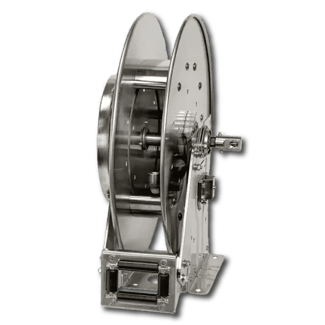
Hannay Reels are built from high-quality steel or stainless steel, making them rugged, corrosion-resistant, and designed for years of heavy use, even in harsh environments.
Safety
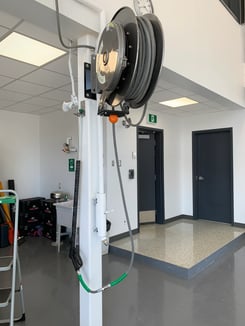
A reel keeps hoses neatly wound and off the ground, reducing the risk of falls or accidents in the workplace.
Time Savings and Efficiency
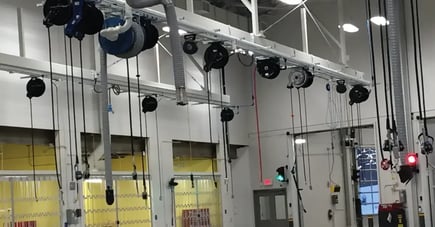
Thanks to their spring or crank return mechanism, hose storage is quick and effortless, speeding up cleaning or watering operations.
Reduced Hose Wear
A hose dragged along the ground wears out quickly. By keeping it wound, the reel extends its lifespan and reduces replacement costs.
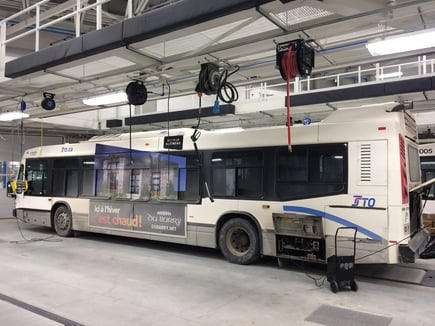
Wide Variety of Models
Hannay Reels offers reels suited for high-pressure cleaning (cold or hot water), fuel (gasoline) or air distribution, and fixed use (wall or ceiling) or mobile use (in a wash trailer or wash platform).
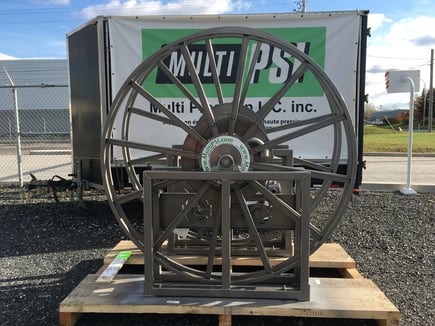
Reliable, Easy-to-Maintain Mechanism
Reels are designed for constant use with minimal maintenance. Several models feature a locking mechanism or an automatic hose-guiding system. In addition, parts are interchangeable, avoiding the need to replace the entire reel.
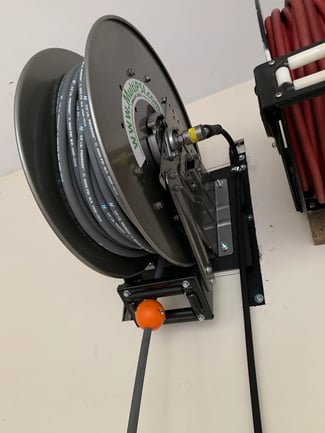
Hannay Reels has been a trusted brand for over 85 years, known for the quality of its manufacturing and the reliability of its products, backed by efficient customer service.
Hose Reel Installation Tips
Hannay Reels are simple to install, but note that the Multi PSI team also offers an installation service if needed.
General Tips Before Installation
It's important to choose the location based on the intended usage area. The area must be clear of the hose's or cable's unwinding path.
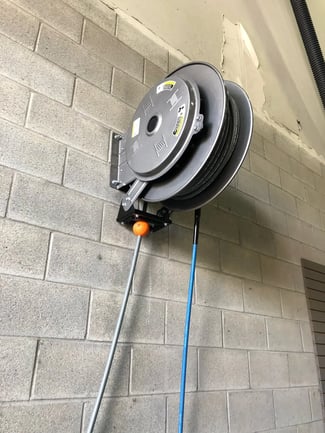
Installing on a Brick or Concrete Wall
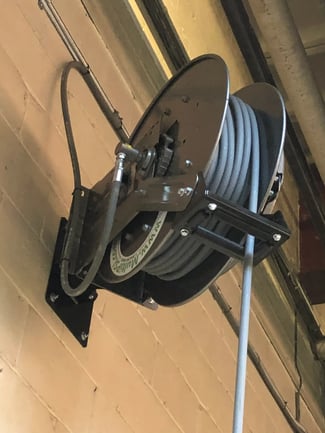
It's important to use anchor bolts of the appropriate diameter. Drill with a hammer drill to properly anchor into the concrete or brick. We suggest adding a steel reinforcement plate if the surface is crumbly or uneven.
Installing on a Wood Wall
It's important to drive directly into structural studs (2x4 or 2x6), not just into finishing panels. Use robust bolts or screws with reinforcement washers. Add a plywood panel screwed across several studs if the anchor points fall between them.
Installing with a Swivel Base
A non-swivel installation is ideal for fixed setups where the hose always exits in the same direction. With a swivel base, the reel can follow the operator for better ergonomics. This is recommended in tight spaces or if the hose needs to be pulled in different directions. It must be securely fastened according to the manufacturer's instructions.
Ceiling Installation
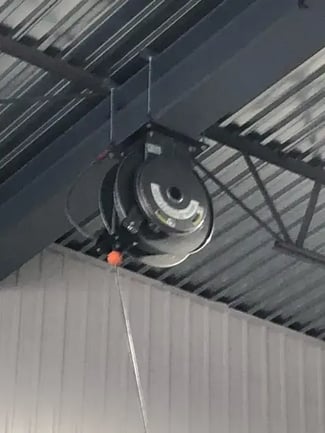
Make sure the structure's load capacity (joists or concrete slabs) is sufficient. Use "L" or "U" brackets designed for ceiling installation. For spring-driven reels, it's strongly recommended to use "SD" fittings in the winding to make winding and unwinding easier, with the guide set to "VR" mode and the option of a stop ball.
Installation Without a Rigid Pipe
We recommend using a flexible connector between the supply pipe and the reel's rotating inlet joint. This helps absorb vibrations and movement, avoiding stress on the system.
Choosing the Right Reel: A Lasting Investment
No matter the environment you work in, whether commercial or industrial, choosing a reel suited to your needs directly contributes to the safety, productivity, and longevity of your equipment. By taking into account the length and type of hose or cable, frequency of use, the type of winding required (manual, spring-driven, or electric), as well as the constraints of your work environment, you'll be able to make an informed choice.
At Multi PSI, we support you throughout this process with a wide range of rugged, high-performing Hannay Reels. A good reel is much more than an accessory: it's a strategic tool for keeping your workspace clean, safe, and functional.
FAQ: Frequently Asked Questions About Hose Reels
What is the difference between a manual, spring-driven, and electric reel?
A manual reel is hand-operated, ideal for short hose lengths. A spring-driven reel winds automatically, with no effort, thanks to a return mechanism. An electric reel, meanwhile, is motorized and designed for longer, heavier hoses, often used in industrial settings.
Can I use a reel for electrical cables?
Yes, some reels are specially designed for electrical cables. However, you need to make sure the model you choose meets the technical specifications of the cable (voltage, amperage, number of conductors, type of insulation).
How do I know what capacity reel to choose for my hose?
Capacity depends on the diameter, length, and bend radius of the hose. A longer or stiffer hose will require a larger drum. Our experts can help you determine the ideal size.
Do all reels allow the hose or cable to be used while it's wound?
No. Only live reels allow the hose or cable to be used directly while it remains wound. Storage reels must be unwound before use.
What type of reel is recommended for a trailer or truck?
12-volt reels are ideal for mobile installations. They integrate easily onto a trailer or utility vehicle and run off the battery.
Are plastic reels suitable for industrial environments?
No. Plastic reels are generally intended for residential use (e.g., gardening). For industrial environments, rugged steel or stainless steel models are recommended, such as those from Hannay Reels.
Can a reel be mounted on a wall or ceiling?
Yes. Several models are designed for wall or ceiling mounting, helping optimize workspace and keep hoses off the ground.
What should I do if my hose is too heavy to wind by hand?
In that case, an electric or spring-driven reel is recommended. These models allow effortless winding, improving ergonomics and safety at the workstation.
Are there reels for food-grade or corrosive environments?
Yes. Some reels are built with stainless or corrosion-resistant materials, perfectly suited to food or chemical environments.
Where can I find an industrial-quality reel?
You'll find a wide selection of professional reels on our Multi PSI website, including Hannay Reels models known for their durability and reliability.
Author : Multi PSI has been an expert in high-pressure washing equipment for over 25 years. As an equipment distributor, we also offer mobile and in-shop repair services. We're known for our expertise in custom projects, including wash platforms and trailers, as well as the installation of washing systems with hose reels, booms, or rails.
Updated May 14, 2025