.png?width=128&height=85&name=Logo%20(3).png)
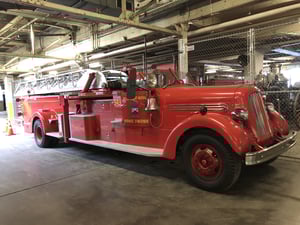
In fire stations, fire and rescue services, operational readiness isn't limited to how quickly crews respond to an emergency call. It's built minute by minute inside the station itself, through rigorous and systematic maintenance of equipment. Decontamination, removal of toxic soot, chassis degreasing, and the upkeep of personal protective equipment are major health, safety, and durability concerns for every municipality.
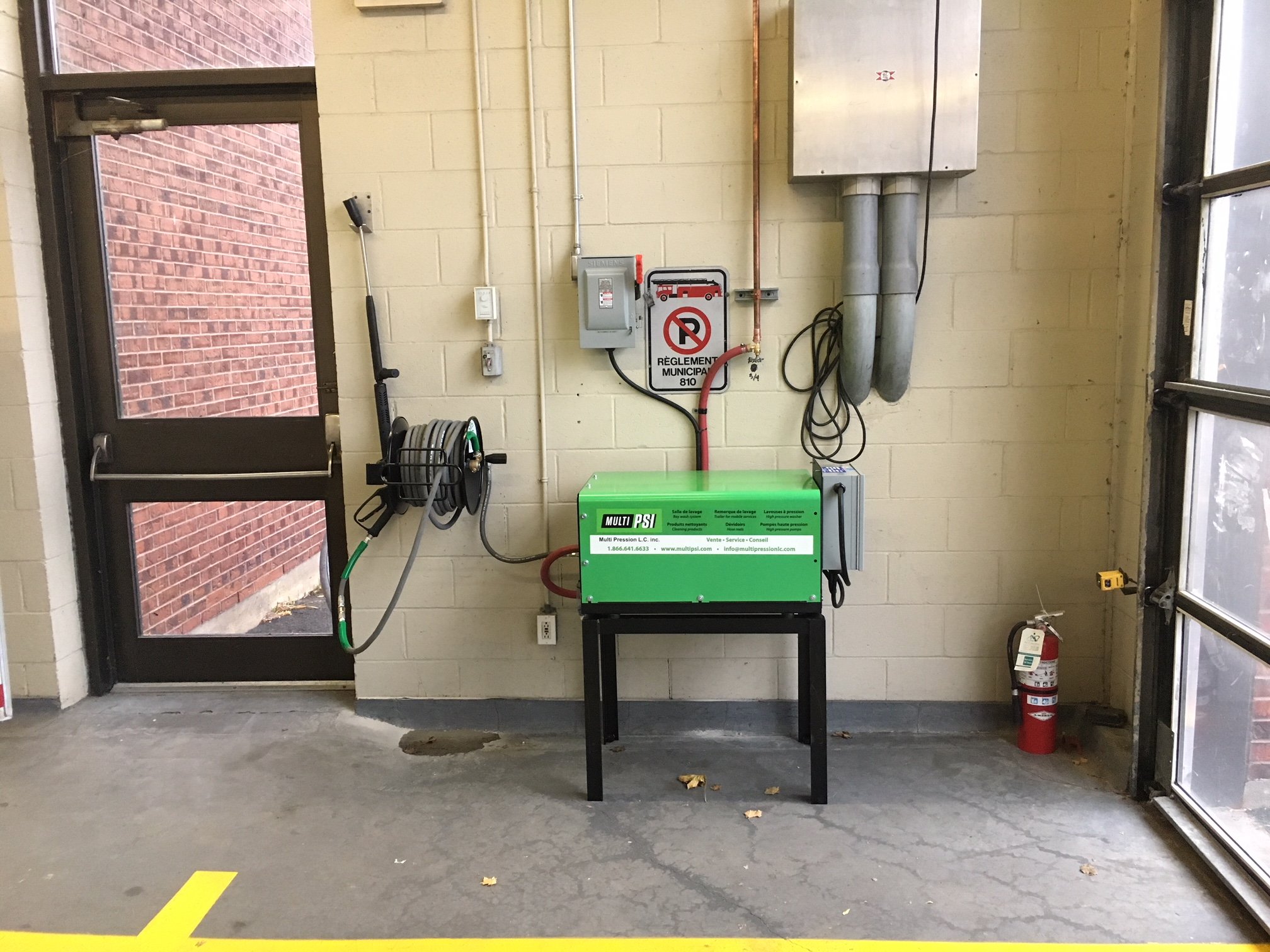
This comprehensive guide was designed to help fire service directors, operations chiefs, municipal infrastructure managers, and construction contractors plan a strategic space: the professional wash bay for a fire station. You'll discover high-pressure washing technologies, detergent distribution systems, overhead rail systems, centralized vacuum systems, and compressed air networks essential to maximizing the turnaround time of your emergency vehicles.
Table of contents
- Optimizing Space: The Sliding Rail Wash Bay
- The Different Types of Professional High-Pressure Washers
- Comparison Table of High-Pressure Pump-Motor Units
- Ergonomic Washing Accessories and Specialized Hose Reels
- Undercarriage for Emergency Vehicles
- Centralized Vacuum System
- Compressed Air Network and Air Compressor
- Strategic Benefits for Fire Services
- Evolving Your Wash Infrastructure
- FAQ About Fire Station Wash Bays
In the course of daily fire service operations, cleanliness and equipment maintenance are essential to protecting crew health and ensuring vehicle reliability. A modern fire station wash bay offers a fast, effective, and versatile solution against stubborn contaminants like soot, grease, oil, and road salt.
Integrating fixed industrial equipment with suspended accessories transforms a simple garage bay into a high-performance decontamination station. Whether cleaning a service truck, a telescoping ladder, hoses, or specialized equipment zones, a well-planned layout reduces vehicle downtime after a call.
Optimizing Space: The Sliding Rail Wash Bay
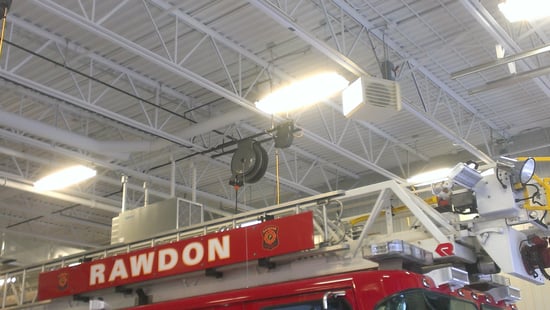
To maximize floor space and keep hoses from dragging through dirty water or under truck wheels, installing an overhead rail system is the gold standard.
An ideal configuration relies on a double rail system installed on each side of the bay — for example, along a 60-foot length. This setup lets crews move freely along the entire length of the vehicle without effort or risk of tripping.
The double rail typically supports two continuously supplied lines:
- A dedicated hot water high-pressure line for removing dirt.
- A dedicated line for applying detergent as high-pressure foam (MHP).
Applying high-pressure foam quickly covers the body and compartments with an adherent layer of cleaning agent. This contact time optimizes the breakdown of carbonized residue and grease before high-pressure rinsing.
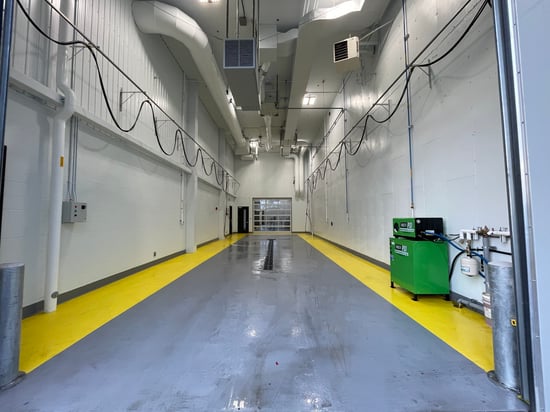
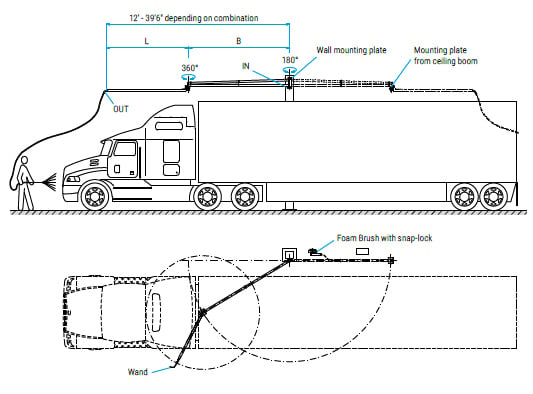
To complement this suspended infrastructure — or if the space doesn't allow for wall- or ceiling-mounted rails — installing a Mosmatic stainless steel wash boom offers exceptional freedom of movement around the front and rear of the vehicle. Its high-precision swivel joint prevents hose twisting and ensures excellent durability under repeated use.
The Different Types of Professional High-Pressure Washers
The heart of the fire station wash bay is the pump-motor unit. The choice of power source and water heating method depends directly on the municipal building's existing infrastructure.
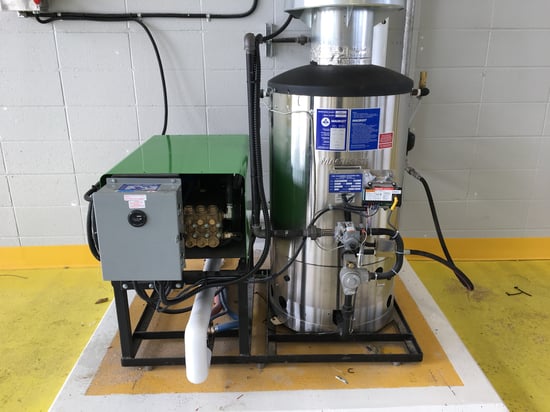
Electric High-Pressure Washer with Natural Gas Burner
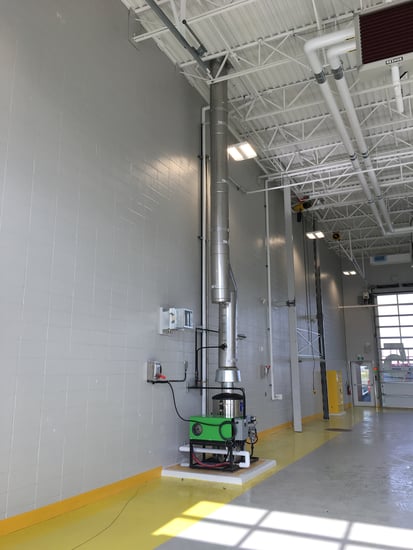
An electric high-pressure washer with a natural gas burner is ideal if the station is already connected to the natural gas network. The unit stays fixed in a rear mechanical room. A gas supply line and a dedicated exhaust flue for combustion gases must be provided. This system delivers continuous hot water without interruptions from liquid fuel.
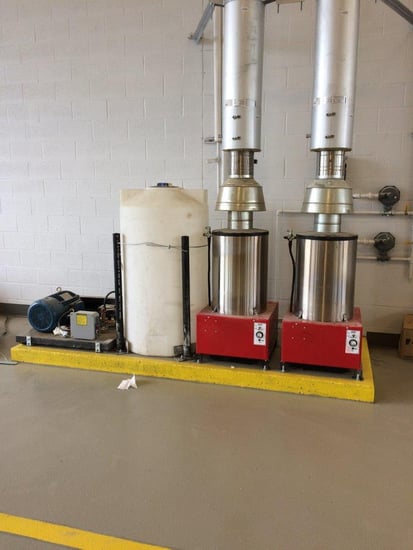
Electric High-Pressure Washer with Diesel Burner
When natural gas isn't available on site, an electric high-pressure washer with a diesel burner is a highly effective alternative. As with the gas model, an exhaust flue compliant with the building's fire safety standards is required, along with an adequate fuel tank.
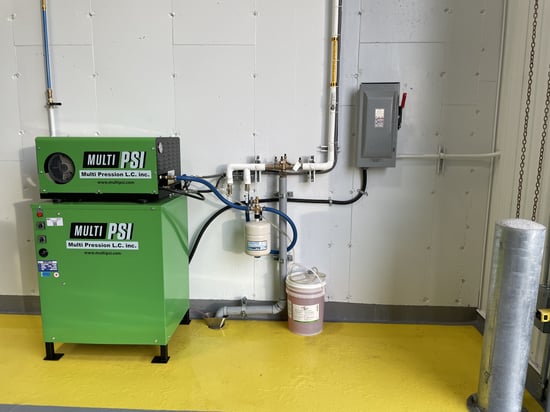
Fully Electric Hot Water High-Pressure Washer with Water Heate
For stations aiming to eliminate gas emissions inside the building or that lack access for an exhaust flue, the 100% electric hot water high-pressure washer is ideal. It uses high-power heating elements to raise the water temperature without any internal combustion or fumes.
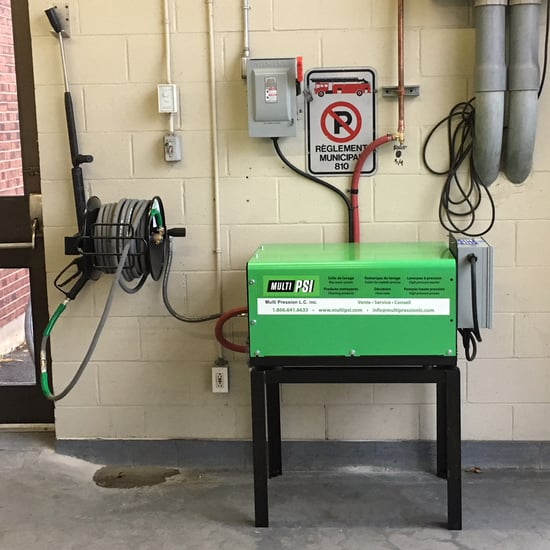
Electric Cold Water High-Pressure Washer with High-Temperature Pump
If the initial installation budget is limited, or if the station already has a high-flow industrial water heater, an electric high-pressure washer with a high-temperature pump is particularly well suited. The unit is fed directly by the building's hot water through an industrial pump equipped with special seals that can handle incoming water up to 185°F (85°C). Optionally, a 24-inch stainless steel cleanliness base can be added to raise the equipment to working height, making it easier to handle.
Comparison Table of High-Pressure Pump-Motor Units
|
Configuration |
Power Source |
Heat Source |
Requires a Flue |
Ideal Application |
|
Fixed Electric / Gas |
Electricity |
Natural gas burner |
Oui |
Stations connected to the gas network |
|
Fixed Electric / Diesel |
Electricity |
Diesel burner |
Oui |
Wash bays without gas access |
|
100 % Electric |
Electricity |
Electric Incoloy elements |
Non |
Buildings with no combustion gas emissions |
|
High-Temperature Pump |
Electricity |
Building hot water (185°F max) |
Non |
Buildings already equipped with a large water heater |
Ergonomic Washing Accessories and Specialized Hose Reels
How accessories are arranged along the walls or at the ends of the rails determines how efficiently firefighters can work after a call.
The choice of hose reels must be carefully evaluated:
- Manual reels: Economical and sturdy, suited to secondary or low-frequency washing zones.
- Spring-loaded (retractable) reels: Offer quick automatic retraction. The hose doesn't drag on the floor and stores away with a single motion. Can be wall- or ceiling-mounted.
- Electric reels: Recommended for long or large-diameter hoses, minimizing physical effort for operators.
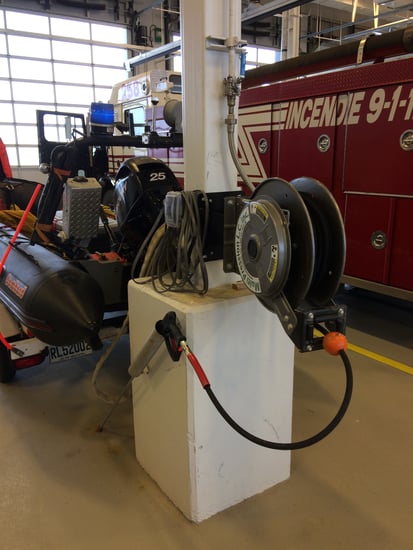
To learn more about optimal hose layout and durable fitting selection, check out our blog post dedicated to industrial hose reels.
Undercarriage for Emergency Vehicles
Fire trucks accumulate an impressive amount of mud, sand, and especially corrosive road salt under the chassis during winter. Premature corrosion of brakes, hydraulic lines, and steel structures represents a major repair cost for municipalities.
Adding an undercarriage washer, such as the Mosmatic Hurricane Pro, connected to the high-pressure network allows crews to rinse underneath trucks without having to lie on the ground. This wheel-mounted unit pivots under the vehicle to project hot high-pressure water jets, quickly eliminating salt and caked-on soot from the underbody.
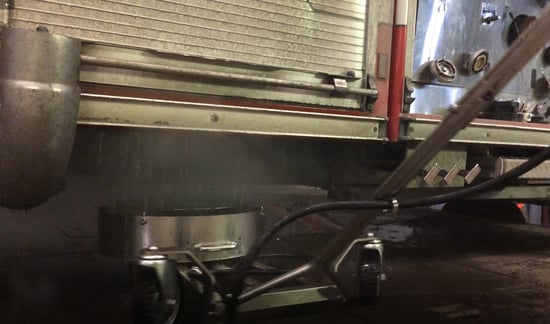
To learn more about surface cleaners and undercarriage washers, check out our blog post dedicated to surface cleaners.
Centralized Vacuum System — High-Performance Drainvac
Cleaning a wash bay isn't just about water jets. Managing stagnant liquid residue and accumulated dirt in truck cabs requires a powerful vacuum system.
The Drainvac central vacuum with low tank (model DV2A31-CB) is the benchmark for demanding environments. It's bagless, water-filtered, and drains automatically to the sewer. Connected to a Vacreel spring-loaded hose reel, this system lets you instantly deploy a 50-foot suction hose to clean vehicle interiors or pump up water accumulated on the concrete floor. It can vacuum both liquids and solids.
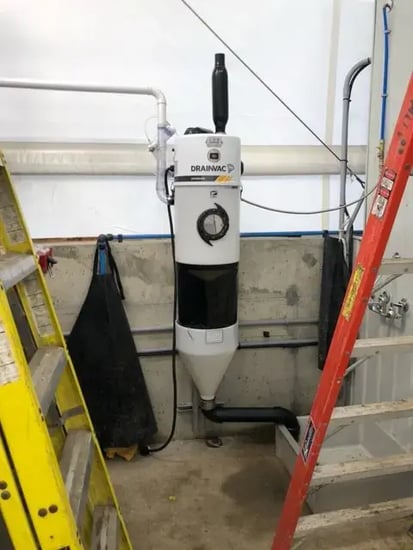
The low tank makes it easy to empty heavy debris and collected sludge. This setup preserves overall bay hygiene and prevents odor buildup from stagnant water. It also makes it easy to recover small objects accidentally vacuumed up, which are caught by a plastic cone surrounded by a splash guard.
Compressed Air Network — Topring and Airtek Compressor
A structured Topring aluminum network ensures clean, leak-free airflow without internal rust. It supplies the various work stations around the wash bay with consistent pressure.
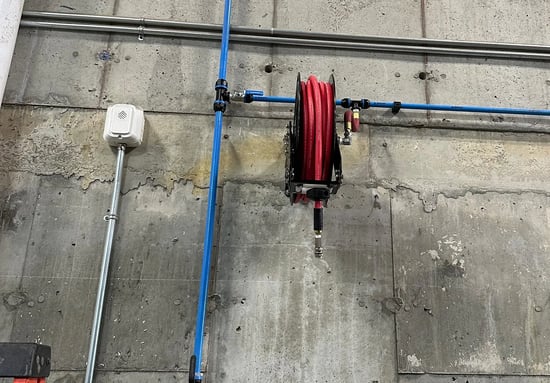
Upstream of the network, installing an Airtek air compressor ensures reliable, continuous compressed air production. Paired with an appropriate air dryer, it protects tools and truck components from residual moisture that could cause internal corrosion.
To learn more about compressed air networks and air compressors, check out our page dedicated to compressed air.
Strategic Benefits for Fire Services
Investing in a complete, modern fire station wash bay delivers concrete benefits from the very first weeks of use:
- Major time savings: The combination of 60-foot rails, high-pressure foam, and retractable reels cuts the time needed to clean up a fire truck after a call by more than half.
- Effective decontamination: Hot pressurized water removes chemical residue, hydrocarbons, and soot containing toxic carcinogens.
- Water and energy savings: Calibrated high-pressure nozzles use up to 70% less water than traditional high-flow garden hose rinsing.
- Protecting your investments: Regular washing of chassis and body panels prevents corrosion caused by de-icing salt, extending the useful life of trucks by several years.
- Personnel safety: No hoses on the floor and immediate liquid extraction drastically reduce the risk of slips and falls for crews on duty.
Evolving Your Wash Infrastructure
Whether building a new station or renovating an existing garage bay, selecting equipment suited to the building's constraints is key to success. Seamlessly integrating water lines, the Topring compressed air network, high-pressure washers, and Drainvac vacuum systems creates an ergonomic work environment.
To assess your technical needs and design a custom layout for your fire service, discover our custom wash bay design services.
Building a High-Performance, Durable Wash Space
A professionally designed fire station wash bay ensures the longevity of your fleet equipment while giving your crews a clean, safe work environment. Combining high-pressure washing technology, overhead suspension systems, and industrial vacuum extraction maximizes every minute spent on maintenance.
To get a technical feasibility study or a personalized layout plan for your fire station, contact us today.
FAQ About Fire Station Wash Bays
Why use a 60-foot rail system in a fire station wash bay?
The 60-foot overhead rail system covers the entire length of a fire truck without needing to move the washer or struggle with hoses stuck on the floor.
What's the difference between MHP high-pressure foam and simple soaping?
MHP high-pressure foam uses a mix of air, pressurized water, and detergent to create a dense foam that clings to vertical surfaces, increasing dwell time on grease and soot.
What's the main advantage of the Mosmatic wash boom?
The Mosmatic boom offers 360-degree rotation without hose twisting, making it easier to safely clean the roof, grille, and rear of emergency vehicles.
Which high-pressure washer should I choose if the station has no natural gas?
Without natural gas, you can opt for a fixed unit with a diesel burner, a 100% electric model with heating elements, or a unit fed by the building's hot water system.
What's the maximum rinse water temperature with a high-temperature pump?
A specialized high-temperature pump can accept incoming water up to 185°F (85°C) to instantly dissolve grease without damaging internal seals.
What is an undercarriage washer used for on fire trucks?
It projects high-pressure jets upward to dislodge mud, road salt, and corrosive residue built up under the chassis, protecting the truck's mechanical structure.
What role does the Drainvac DV2A31-CB central vacuum play in the wash bay?
This low-tank vacuum quickly extracts standing water on the floor, dirt from truck cabs, and debris accumulated after calls.
Why pair a Vacreel retractable reel with the Drainvac vacuum?
The Vacreel spring-loaded reel keeps the suction hose suspended and neatly stored, preventing it from dragging through dirty water and speeding up deployment.
Why choose an aluminum Topring compressed air network?
The Topring aluminum network provides a perfect seal, doesn't rust internally despite the wash bay's humidity, and maintains optimal airflow for drying parts.
What are the benefits of the Airtek compressor for emergency response?
The Airtek compressor delivers stable, dried airflow — perfect for running pneumatic tools and quickly cleaning delicate protective equipment components.
Author: Multi PSI has been an expert in high-pressure washing equipment for over 25 years. As an equipment distributor, we also offer mobile and in-shop repair services. We're recognized for our expertise in custom projects, including wash platforms and trailers, and the installation of washing systems with hose reels, booms, or rails.
Updated September 9, 2026