.png?width=128&height=85&name=Logo%20(3).png)
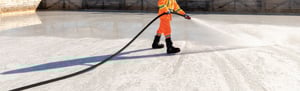
The arrival of cold weather and freezing winter temperatures marks the beginning of the skating season in many towns, municipalities, and communities across the country. To guarantee an enjoyable, smooth, and safe experience for skating enthusiasts, it is essential to prepare your frozen surfaces with the utmost care. Whether managing a large, covered municipal indoor arena or setting up a neighborhood outdoor rink subject to the whims of the weather, using specialized equipment is the absolute key to success.
Creating a high-quality ice surface cannot be improvised; it requires rigor, an excellent understanding of thermal conditions, and tools capable of withstanding the most hostile environments. In this comprehensive guide, we cover everything you need to know in depth to install, flood, resurface, and maintain professional-grade ice. Thanks to our strategic ice rink kit, optimize your daily operations from the very first freeze and provide an exceptional infrastructure for your community.
Table of contents
- Why Proper Ice Rink Equipment is Crucial
- Essential Components of a Professional Ice Rink Kit
- Comparative Table of Equipment Configurations Based on Use
- Step-by-Step Guide: How to Install, Setup, and Flood Your Rink
- Climate Challenges: Indoor vs. Outdoor Rink Ice Management
- Conclusion
- FAQ: Answers to Your Questions Regarding the Ice Rink Kit
Why Proper Ice Rink Equipment is Crucial ?
A smooth, dense, transparent, and safe ice sheet does not happen by magic or by a simple superficial watering with a standard garden hose. Municipalities, arena managers, and public works crews face constant climatic, physical, and logistical challenges during the resurfacing process. Using adapted professional tools is the only viable option to meet these specific requirements. Without proper pumping and distribution infrastructure, ice weakens, cracks, and wears out at an accelerated rate, jeopardizing the season's investments.
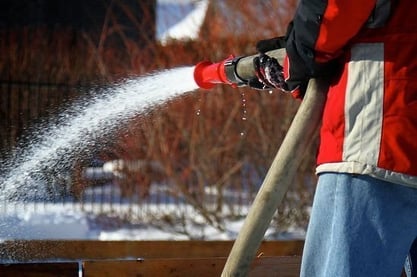
The Impact of Quality Tools on Time Savings
When the mercury drops below freezing, every minute spent outdoors by operators represents a physical challenge. Traditional methods using heavy, rigid hoses that are impossible to coil significantly slow down operations. Modern professional equipment eliminates these frictions. Automating the rewinding process and increasing accessory maneuverability cuts the time required to perform a full resurfacing in half. This time saving is particularly critical during deep-freeze nights, when teams must maximize the number of water applications to build up the required thickness before sunrise.
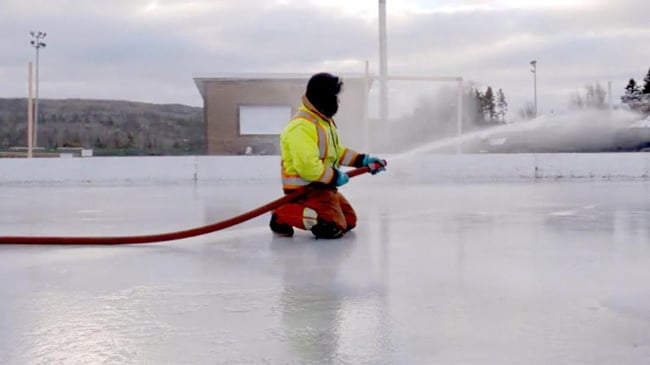
User Safety: An Absolute Priority
A poorly maintained or unevenly flooded ice rink poses major safety risks for skaters, whether they are young hockey players or families out for a recreational skate. Bumps, potholes in the ice, trapped air bubbles that burst under blades, and thin spots are all causes of falls and serious injuries. A controlled, uniform application of water seals the surface consistently, filling in the smallest grooves left by skate blades. The homogeneity of the ice's crystalline structure ensures that it will not chip or flake under the impact of sudden stops.
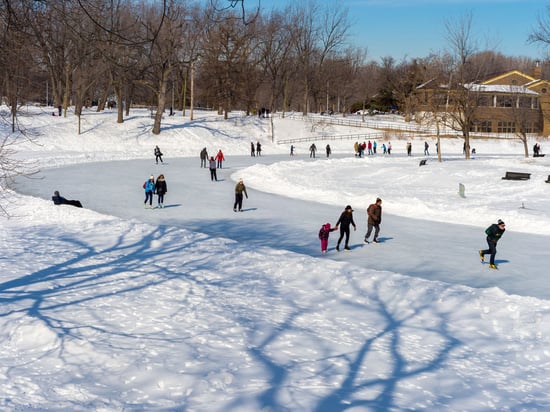
Resource Optimization: Water and Energy
Eco-responsible water management is at the heart of modern public administration concerns. Uncontrolled flooding inevitably leads to massive fresh water waste, excessive accumulation in the corners of the rink, and unnecessary stress on the retaining boards. Furthermore, in indoor arenas, every extra gallon of water applied requires increased energy expenditure from the refrigeration system to force freezing. By using precision nozzles that atomize water at the exact flow rate required, you optimize water consumption while reducing the overall energy bill associated with maintaining the refrigerated slab.
Essential Compnents of a Professional Ice Rink Kit
To achieve a result that meets the highest professional standards, your teams must be able to rely on robust components, tested for the North American climate and easy to maintain. Our ice rink kit groups together the essential tools that transform manual resurfacing into a simple, predictable, and highly efficient procedure.
Hannay Reels Electric Hose Reels : Automation of Maximum Efficiency
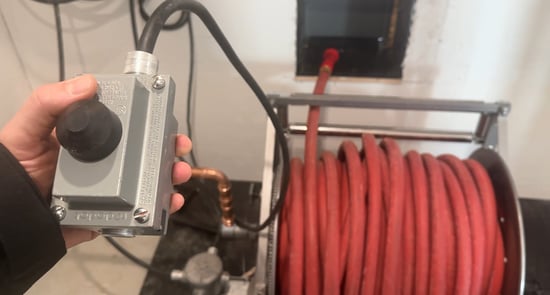
The electric hose reel is the backbone of any winter fluid management setup. Carrying and manually winding hundreds of feet of hose weighted down by water and stiffened by extreme cold is a frequent source of musculoskeletal injuries among workers. Choosing a Hannay Reels brand hose reel brings unmatched industrial robustness to the industry.
Flexible Power Supply: Models come in two major versions to match your logistical infrastructure. The 12-volt direct current (V DC) version is ideal for bolting directly onto the bed of a utility vehicle, a flooding trailer, or a compact service tractor. The 115-volt alternating current (V AC) version is perfect for permanent indoor installations in arena mechanical rooms or near building exterior water outlets.
Precision Hose Guide (Optional): This mechanical accessory guides the hose from left to right across the drum during winding. It completely eliminates messy overlapping, tension knots, and hose crushing, extending the hose's useful life by several years.
Mechanical Backup System: Outdoor power outages in the middle of a snowstorm can paralyze a site. Hannay Reels integrates a heavy-duty auxiliary crank handle allowing for an emergency manual rewind without needing to remove the motor or disengage the drive shaft.
High-Quality Water Hoses : Thermal Flexibility and Durability
The water hose is subjected to high internal pressures and constant friction on ice or rough peripheral asphalt. Cheap conventional PVC hoses harden as soon as the temperature drops below freezing, becoming as brittle as glass and impossible to handle.
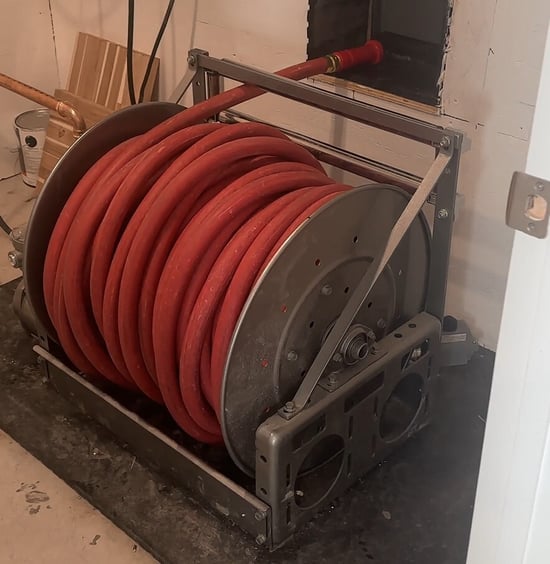
A true industrial resurfacing hose must have a minimum inside diameter of 1.5 inches. This generous diameter ensures a sufficient volumetric flow rate to pour large volumes of water quickly, preventing the water from freezing inside the line before it even reaches the nozzle. In terms of length, a minimum deployment of 200 to 300 feet is essential to navigate freely from one end of a large skating surface to the other without restricting the operator's movements. The outer jacket made of synthetic rubber or reinforced polymer is UV-treated and remains flexible down to extreme temperatures of -40 degrees, ensuring a perfect slide across the snow.
Polycarbonate Nozzles : precision Spraying
The spray nozzle is the final link in the chain, but it directly determines the final quality of your ice. Traditional metal spray lances made of brass or aluminum have a major drawback in winter: they act as perfect thermal conductors. They transfer cold instantly, causing water droplets to freeze inside the nozzle, blocking the stream and painfully sticking to operators' wet gloves.
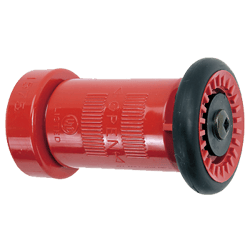
An industrial polycarbonate nozzle permanently solves this issue. This premium composite material possesses excellent thermal insulation properties, preventing water from freezing inside the spray channels. Furthermore, polycarbonate offers phenomenal resistance to repeated mechanical impacts when the nozzle is dropped on the ground or accidentally struck against wood or polyethylene rink boards. The internal mechanism allows for precise adjustment of the spray pattern, shifting from a fine mist (ideal for finish coats) to a wide, full stream (ideal for filling deep cavities initially).
Comparative Table of Equipment Configuration Based on Use
Your choice of ice rink kit must align with the geographic and structural realities of your resurfacing site. The table below summarizes the optimal specifications recommended by our engineers:
|
Operational Feature |
Indoor Arena Configuration |
Outdoor Rink Configuration |
Ice Trail / Large Surface Configuration |
|
Hannay Reels Model |
Wall Mount - 115 Volt Model |
Vehicle/Trailer Mount - 12 Volt Model |
Heavy Mobile Mount - 12V or Hydraulic |
|
Hose Inside Diameter |
1.5 inches |
1.5 inches |
1.5 to 2.0 inches |
|
Recommended Length |
150 to 200 feet |
200 to 300 feet |
300 to 400+ feet |
|
Nozzle Material |
High linear flow polycarbonate |
Adjustable mist polycarbonate |
Long-range dual-handle polycarbonate |
|
Recommended Water Type |
Hot water (60°C to 70°C) |
Cold or lukewarm water depending on weather |
High-flow cold water |
|
Maintenance Frequency |
After every 60-minute cycle |
Daily during freezing periods |
After each prolonged use |
Step-by-Step Guide : How to install, Setup, and Floor Your Rink
Creating crystal-clear ice requires a strict methodology. Following a methodical application protocol ensures that your efforts will not be ruined by a sudden thaw or improper handling.
Ground Preparation and Initial Positioning
Before opening the first water valve, the underlying ground must be meticulously prepared. If dealing with an outdoor rink built on dirt or grass, wait until the ground is frozen to a depth of at least two inches. If you apply water to warm ground, it will simply seep into the earth, creating mud and destabilizing the foundations of your future ice structure.
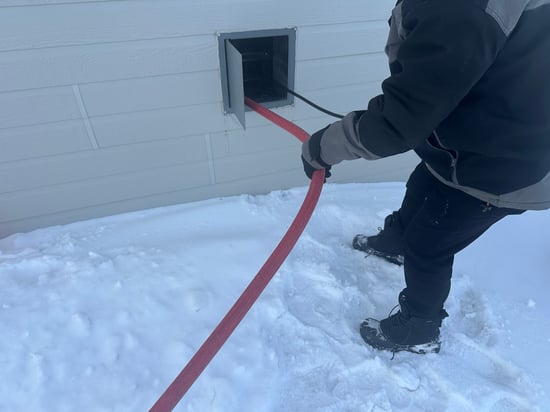
Position the Hannay Reels electric hose reel so that it sits exactly in the center of the rink's long longitudinal axis. This geometric alignment reduces blind spots and decreases the pulling force required to move the hose. Unroll the entire length of the hose on a clean surface to eliminate any residual tension built up during off-season storage.
The Thin, Successive Layer Flooding Technique
The most common mistake made by beginner operators is flooding the ground with a massive amount of water all at once, hoping it will freeze as a solid block. This approach leads to disaster: water pools by gravity in low areas, creating pockets of liquid isolated beneath a thin upper crust. When a skater's weight presses on this crust, it collapses, creating dangerous traps.
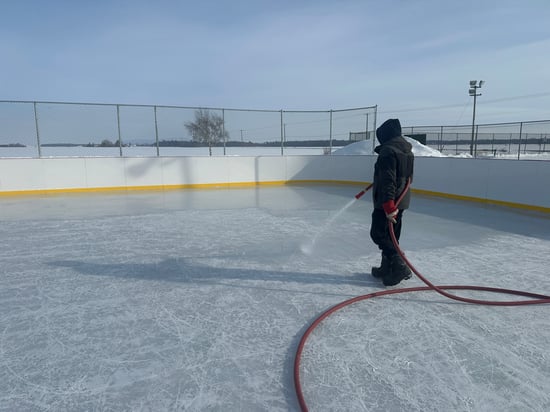
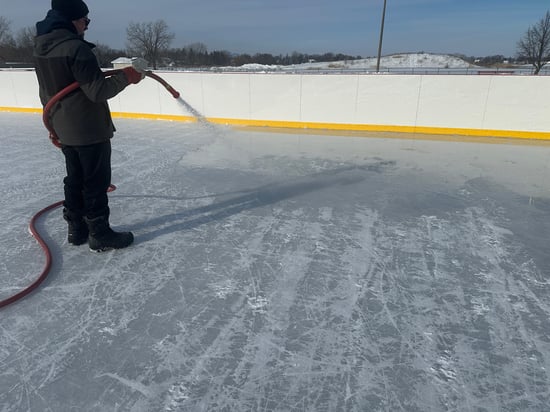
The golden rule is to apply thin, successive layers, no thicker than an eighth of an inch at a time. Use the polycarbonate nozzle set to a wide spray or mist mode. Walk at a steady pace, sweeping the surface from left to right without stopping. The atomized water solidifies almost instantly upon contact with the cold air and frozen ground. Let the layer freeze completely (usually between 30 minutes and two hours depending on wind and outdoor temperature) before applying the subsequent coat. Repeat this process until a safe thickness of at least three to four inches is achieved.
Post-Use Purging and Maintenance to Prevent Freezing
Maintaining your equipment after flooding is just as important as the resurfacing itself. Once the session is over, immediately close the main water supply valve. Disconnect the polycarbonate nozzle and open it manually to drain any water trapped inside its rotating mechanism.
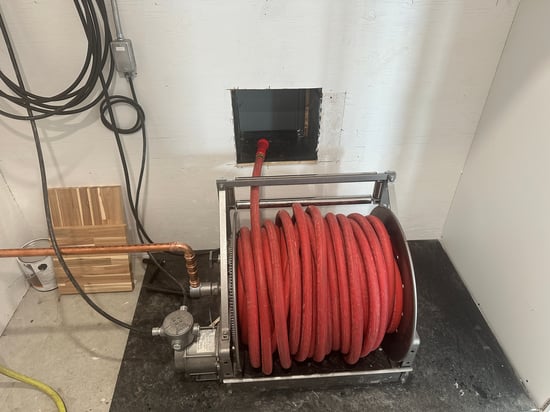
For the hose, activate the electric reel to begin winding while continuously lifting the hose at arm's length from the opposite end. This mechanical action uses gravity to purge residual water toward the drainage point. If water remains trapped inside the hose, it will freeze into a solid plug within minutes, rendering the system completely unusable for the next day and risking splitting the inner walls of the line during thermal expansion cycles. Store the nozzle and quick-connects in a heated, dry space to preserve the integrity of the rubber gaskets.
Climate Challenges: Indoor vs. Outdoor Rink Ice Management
The operating conditions of a frozen surface vary radically depending on whether you are inside a modern sports complex or out in the open air, exposed to the elements of winter.
Inside an arena, the environment is highly controlled but features unique pitfalls. Relative air humidity, radiation from ceiling lights, and the ventilation system all influence ice texture. Arena operators almost exclusively use hot water (between 60°C and 70°C) to resurface. Hot water has a lower oxygen concentration than cold water, which prevents micro-air bubbles from forming. The result is an exceptionally dense, hard, translucent sheet of ice that resists deep cuts caused by high-performance hockey skates much better.
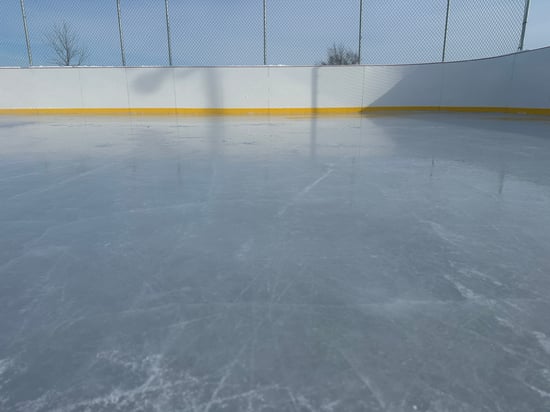
Outdoors, the operator is entirely at the mercy of the weather. Wind is the ice's worst enemy: it accelerates evaporation, carries debris (leaves, dust, sand) that embeds into the surface, and creates wave patterns if water is applied too generously. Furthermore, sudden temperature swings—such as a thaw followed by a flash freeze—cause thermal expansion that creates massive cracks across the rink. Outdoors, using lukewarm or cold water is often preferred to avoid creating a thermal shock too violent for the base ice, which could cause the structure to shatter.
Conclusion
Preparing properly for the winter season requires rigorous planning, proven technical expertise, and top-tier industrial tools. By choosing to invest in a complete professional ice rink kit, you guarantee not only the longevity of your municipal infrastructure but also offer maximum safety and unmatched fun for citizens, families, and athletes in your community.
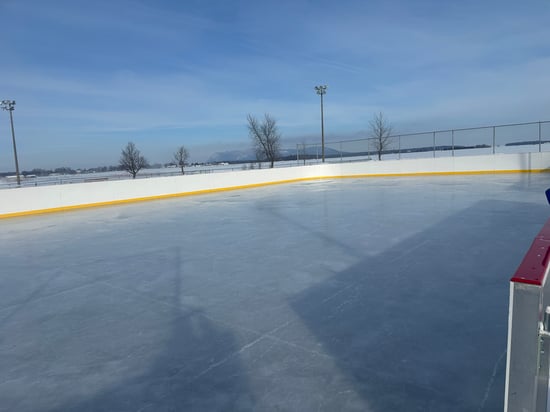
Multi PSI stands as your trusted business partner for the distribution of industrial-grade resurfacing, pumping, and high-pressure washing equipment. Our team of technical advisors is completely at your disposal to guide you in selecting the exact configuration that meets the specific constraints of your facilities.
To order parts, replace worn hoses, or obtain an official customized quote for your municipality:
Direct Email: support@multipsi.comPhone Line: 450-641-6633
Get a head start on winter, prepare your infrastructure today, and deliver memorable skating moments in complete safety!
FAQ: Answers to Your Questions Regarding the Ice Rink Kit
What is the average price of a professional ice rink kit ?
The purchase price of a complete system varies mainly based on the total length of hose required, its diameter, and the type of motor selected for the Hannay Reels electric hose reel (12V or 115V). A 115-volt electric reel with a rewind switch, a hose guide, an auxiliary crank, a 1.5-inch by 200-foot hose, and a polycarbonate nozzle costs around $6,000. We invite you to contact our technical sales team directly to obtain a detailed written quote tailored to the specific needs and budget constraints of your municipality or commercial organization.
Can hot water be used to flood an outdoor ice rink?
Yes, using hot water is possible and even highly recommended if your infrastructure has a suitable outlet. Hot water instantly melts a very thin top layer of the existing ice, allowing the new water to create a perfect molecular fusion with the base. This eliminates weak boundary lines and erases surface imperfections much more effectively than cold water.
How do I prevent a water hose from freezing during maintenance operations ?
To prevent water from freezing inside the hose when operating in extreme cold, you must maintain a constant flow of moving water. Never close the nozzle for more than a few seconds while outdoors. Once the flooding work is complete, close the main valve and immediately purge all residual liquid by lifting the hose as it winds onto the reel.
What is the ideal ice thickness for opening a public rink safely ?
A continuous minimum thickness of 3 to 4 inches of clear, dense ice is absolutely required before allowing public access. This thickness ensures that the structure can support not only the combined weight of dozens of simultaneous skaters but also the mechanical load of light maintenance equipment, such as compact tractors equipped with snow plows.
Why choose a polycarbonate nozzle over a traditional aluminum nozzle ?
Industrial polycarbonate has much higher thermal insulation properties than metals. It prevents water from cooling down too quickly inside the spray head, thereby eliminating ice blockages. Additionally, unlike aluminum which becomes extremely sticky to skin and gloves in deep cold, polycarbonate remains safe to handle and absorbs heavy impacts without deforming.
Is a 12-volt hose reel sufficient for intensive industrial use ?
Absolutely. The 12-volt motors installed on industrial Hannay Reels are built to handle demanding work cycles in the harshest environments. They deliver high torque, perfectly suited for winding heavy 1.5-inch diameter hoses filled with residue, all while connecting directly to your service vehicle's battery.
How do you repair a deep crack or groove on the ice surface ?
To repair a major crevasse that presents a tripping hazard, prepare an ice mortar by mixing clean, fine snow with lukewarm water (the "slush" technique). Fill the crack manually using a trowel or shovel, pack the mixture firmly to push out air, level it with the surrounding surface, let it freeze, and then apply a thin layer of finish water with your nozzle.
What is the actual difference between a 1-inch and a 1.5-inch diameter hose ?
A hose with a 1.5-inch inside diameter allows a considerably higher volume of water to pass per minute than a 1-inch hose, while minimizing friction pressure loss. A high flow rate is essential for covering vast areas quickly; the water spreads evenly across the entire rink before it has time to freeze prematurely or create unsightly ridges.
How often should a public outdoor rink be resurfaced ?
The frequency depends directly on user traffic and daily weather conditions. For standard municipal use during peak season, it is highly recommended to clear snow and perform a full refreshing flood 2 to 3 times a week. In cases of intense cold snaps or after local hockey tournaments, daily maintenance is preferable.
Can the ice rink kit be customized to fit our specific municipal infrastructure ?
Yes, definitely. Our industrial ice rink kits are fully modular. Whether you need a specific hose length (from 150 to over 300 feet), a particular power supply for your electric Hannay Reel (12V for utility vehicles or 115V for wall mounts), or specialized high-flow nozzles, Multi PSI tailors every component to match your exact operational requirements and layout constraints.
Author: Multi PSI has been an expert in high-pressure washing equipment for over 25 years. As an equipment distributor, we also offer mobile and workshop repair services. We are recognized for our expertise in custom projects, including washing platforms and trailers, as well as the installation of washing systems with reels, poles, or rails.
Updated on July 13, 2026