.png?width=128&height=85&name=Logo%20(3).png)
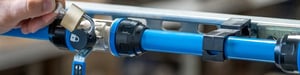
In an industrial workshop or heavy-duty facility, a reliable compressed air system is one of the most strategic drivers of productivity. A poorly designed piping network, chronic leaks, or an undersized compressor can directly impact your energy costs, team safety, and equipment availability.
At Multi PSI Inc., we know that choosing the right system and brand makes all the difference. That is why this guide takes a closer look at the Topring compressed air system—a premium aluminum piping network—and Airtek air compressors, built in Quebec for industrial applications.
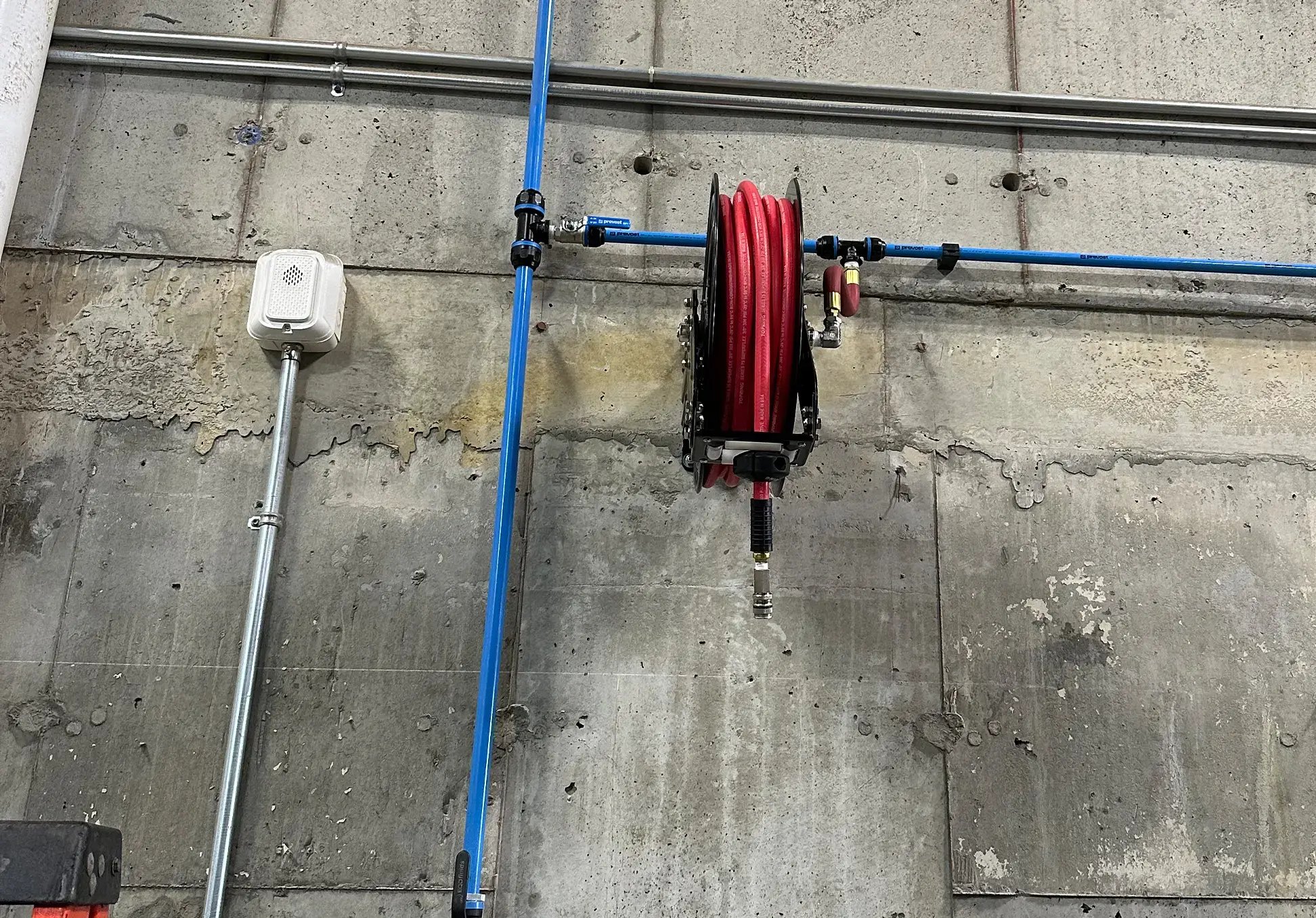
Here you will find selection criteria, concrete advantages of each brand, our recommended on-site integration methodology, as well as a FAQ section to clarify the most common questions.
Table of contents
- Why a Good Compressed Air System Is Essential
- The Topring Aluminum Network: Features and Benefits
- Airtek Compressors: Brand, Product Line, and Industrial Adaptation
- Multi PSI Integration: How We Apply These Solutions in Practice
- Comparative Table & Quick Checklist
- A Cost-Effective Investment for Your Workshop
- FAQ: Frequently Asked Questions About Compressed Air Systems and Air Compressors
Why a Good Compressed Air System Is Essential
Compressed air is often called the "fourth utility" in a workshop, alongside electricity, water, and drainage. Indeed, it is everywhere: pneumatic tools, high-pressure cleaning, blow-off stations, particle conveying, paint booths, and many other daily applications.
A poorly designed setup can lead to several costly problems:
- Significant pressure drops, which reduce useful airflow at point-of-use equipment;
- Chronic leaks, which can account for a substantial portion of compressed air production if left unaddressed;
- Excess energy consumption, keeping in mind that electricity costs typically represent the majority of a compressed air system’s total cost over its lifespan;
- Unplanned downtime or premature failures, caused by improper air treatment, condensation, corrosion, or neglected maintenance.
Investing in a proper, durable, high-performing, and correctly installed system and compressor is a win-win strategy: increased productivity, lower operational costs, and superior air quality for your tools and equipment. This fact is widely documented by public organizations specializing in industrial energy efficiency, which remind us that energy consumption accounts for far more of the overall bill than the initial purchase price of the equipment.
The Topring Aluminum Network: Features and Benefits
What Is Topring?
Topring is a recognized expert in compressed air piping systems. Its PPS line, also known as Series 08, is a 100% aluminum piping network certified with a Canadian Registration Number (CRN). This certification guarantees that the system complies with current safety standards across Canadian provinces.
Why Choose Aluminum?
Here are the key points explaining the growing popularity of aluminum piping networks in Quebec industrial workshops:
- Corrosion Resistance: Aluminum naturally forms a thin oxide layer that protects the metal, preserves the internal pipe diameter, and ensures long-term air quality.
- Lower Pressure Loss: The smooth inner surface of the pipes limits air turbulence, resulting in better energy efficiency across the system.
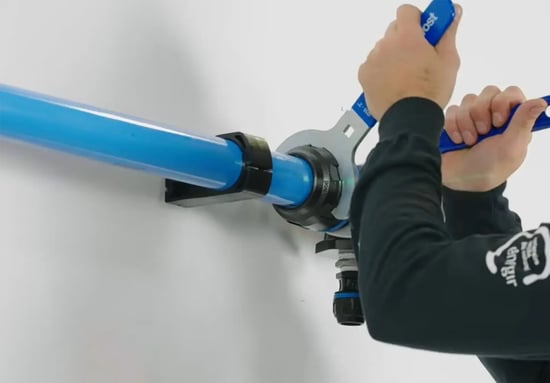
- Faster and Lighter Installation: Components are lightweight, easy to handle, and most fittings require no welding or threading.
- Long-Term Durability: Several Topring components come with up to a 10-year warranty against manufacturing defects.
Technical Criteria to Verify
When sizing a Topring compressed air system with Multi PSI, several technical factors must be confirmed prior to installation:
- Pipe diameter, matched to airflow requirements (CFM or L/min) and operating pressure (psig or bar).
- Fittings and joints compatible with your layout (compression, flange, V-clamp).
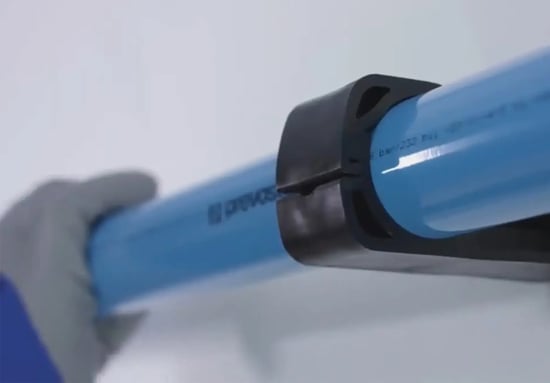
- Proper mounting, using appropriate clips, supports, and drop legs to prevent vibration and sagging.
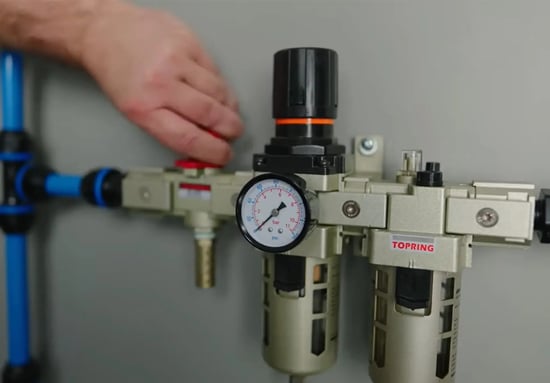
- Upstream air treatment (dryer, filters, condensate drains) so the piping network itself does not become the weak link.
- Applicable warranties, CRN compliance in Canada, and future expansion options.
Airtek Compressors: Brand, Product Line, and Industrial Adaptation
Who is Airtek?
Based in Montreal, Airtek has been designing and manufacturing air compressors for over 50 years. The company focuses on custom engineering and local technical support—a major advantage for workshops seeking quick parts delivery and prompt service in Quebec.
Airtek Product Lines and Their Applications
Airtek offers a comprehensive line of horizontal electric compressors, ranging from fractional horsepower units to heavy industrial ratings, with tank capacities from 20 to over 200 gallons. The company also manufactures vertical units designed for facilities where floor space is limited.
This wide inventory, combined with fast service and custom tailoring per application, allows Multi PSI to offer a compressor suited to almost any industrial environment: municipal garages, fleet maintenance facilities, wash bays, or manufacturing plants.
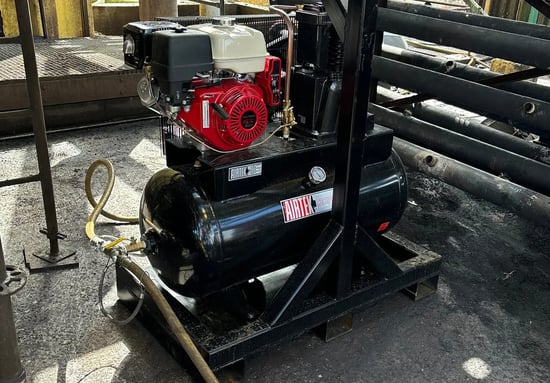
How to Size an Airtek Compressor?
Multi PSI recommends the following steps to properly select your Airtek compressor:
- Evaluate actual air demand in the shop by adding up the CFM (or L/min) requirements of all tools and machinery, then applying a concurrency/duty factor.
- Select a compressor with a capacity exceeding this demand, leaving headroom for future facility growth.
- Verify tank volume, duty cycle rate, operating pressure, and electrical configuration (single-phase vs. three-phase).
- Factor in site constraints, including heat dissipation, ventilation, physical footprint, and maintenance clearance around the unit.
- Plan maintenance from day one, including oil changes, filter replacements, and regular tank purges to maximize longevity.
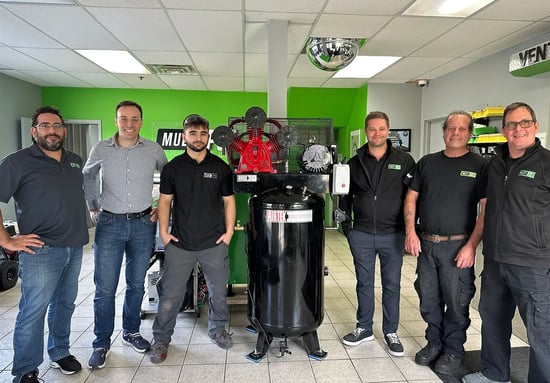
Multi PSI Integration: How We Apply These Solutions in Practice
Installation Steps and Best Practices
Every project follows a structured methodology engineered to minimize unexpected issues and maximize system life:
- Site Assessment: Evaluation of existing piping, leak detection audit, load sizing, and anticipation of future needs.
- Material Selection & Supply: Topring aluminum piping network, Airtek compressor, and auxiliary air treatment components (filters, dryer, drains).
- Installation: Fitting structural supports, assembling the piping network, performing pressure and leak testing, and final commissioning.
- User Training: Guiding staff on maintenance routines, leak detection, and daily best practices.
- Follow-Up & Preventive Maintenance: Implementing a routine service plan to maintain peak efficiency and operational safety.
Case Studies in Quebec
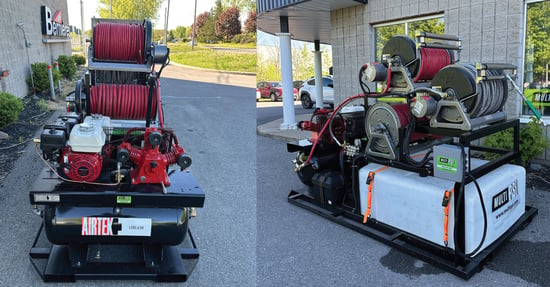
At Multi PSI, we have deployed aluminum compressed air networks and industrial compressors across various settings: fleet maintenance facilities, municipal garages, commercial wash bays, and mobile washing platforms. Combining a Topring network with an Airtek compressor consistently delivers reduced pressure drops and cleaner air to pneumatic tools across every sector.
This expertise is backed by our team’s 25+ years of experience in industrial equipment; you can learn more about our background and field-proven approach.
Maintenance and Ongoing Optimization
A compressed air system that performs flawlessly at installation can quickly lose efficiency if neglected. Here are a few practical tips to safeguard your investment:
- Monitor leaks regularly: A systematic leak detection program can yield significant electrical savings.
- Drain condensate continuously, both from the compressor receiver and the distribution piping.
- Ensure the air dryer remains operational at all times, as low humidity extends the service life of the aluminum network and connected tools.
- Inspect fittings, supports, and accessories every 6 to 12 months to preserve optimal flow.
- If your current setup shows signs of fatigue, our repair shop and mobile technical support team can step in to overhaul your installation before a breakdown occurs.
If your current equipment is showing signs of wear and tear, our repair shop and technical team can step in to bring your system up to standard before a breakdown occurs.
Comparative Table & Quick Checklist
| Criterion | Topring Aluminum Network | Traditional Steel Piping |
|---|---|---|
| Weight & Installation | Lightweight, fast assembly | Heavy, requires welding/threading |
| Corrosion Resistance | Excellent (natural oxide protection) | High risk of internal scale & rust |
| Pressure Loss | Low (smooth inner walls) | Higher turbulence and restriction |
| Operating Cost (Energy + Maintenance) | Lower over long term | Can be higher due to friction & leaks |
| Modification Flexibility | High (modular push-in/clamped fittings) | Low (rigid, labor-intensive edits) |
Quick Pre-Purchase Checklist:
- Required airflow and pressure calculated (CFM / L/min).
- Network material confirmed (Topring aluminum).
- Compressor properly sized (Airtek unit selected).
- Air treatment included (dryer, inline filtration, auto-drains).
- Maintenance schedule established.
- Warranties and Canadian certifications (CRN) verified.
A Cost-Effective Investment for Your Workshop
Selecting a high-performance compressed air network and a dependable compressor is a strategic investment for any industrial facility. Topring aluminum piping and Airtek compressors fulfill strict demands for quality, durability, and efficiency while integrating seamlessly into existing shop layouts.
At Multi PSI Inc., we support you at every stage: design, equipment supply, turnkey installation, and ongoing maintenance. Whether starting from a clean slate or upgrading an aging system, our team understands the unique requirements of Quebec industrial workshops.
Contact us today for a system evaluation, a compressed air audit, or a turnkey proposal. Your shop’s efficiency starts with proper air system design.
FAQ - Frequently Asked Questions About Compressed Air Systems and Air Compressors
What airflow capacity (CFM or L/min) should my Airtek compressor provide?
To select an Airtek compressor, first inventory all pneumatic tools and equipment that will operate simultaneously, apply a concurrency factor (typically 60% to 80%), and calculate peak demand. Then add a growth margin to accommodate future shop expansion.
Why choose an aluminum network like Topring over traditional steel?
Aluminum offers superior corrosion resistance, a smooth interior surface that minimizes pressure drops, faster installation, and lower long-term energy and maintenance costs over the lifespan of the compressed air system.
Is the Topring system certified for use in Canada?
Yes. Topring pipes and fittings carry a Canadian Registration Number (CRN), recognized across Canadian provinces, including Quebec.
What operating pressure should I aim for with an Airtek compressor in an industrial shop?
It depends on your tools and equipment. Most industrial workshops operate between 100 and 150 PSI (approx. 6.9 to 10.3 bar). Select Airtek models can achieve higher pressure ratings depending on the application.
How can air leaks be prevented in a Topring or Airtek installation?
The best approach is to promptly locate and repair leaks, install properly sized distribution piping, inspect fittings periodically, and drain condensate regularly. Adequate upstream air treatment also prevents component wear.
What is the difference between a horizontal and vertical Airtek compressor?
Horizontal compressors are ideal for facilities with ample floor space and generally offer higher tank capacities. Vertical compressors feature a compact footprint, making them an excellent choice for tight spaces without sacrificing industrial output.
What routine maintenance is required for a Topring and Airtek setup?
Routine maintenance includes draining condensation from tanks and dryers, checking and replacing air filters, monitoring air quality, conducting periodic leak detection audits, checking pressure settings, and inspecting network mounts and fittings.
Can a Topring piping network be expanded easily at a later date?
Yes. Thanks to its modular design and quick-connect fittings, the Topring aluminum network is engineered to be expanded or reconfigured easily as your shop grows.
What are the financial returns of a well-designed compressed air system?
Reduced pressure drops, minimized air leaks, lower electrical consumption, less maintenance, and reduced unplanned downtime combine to deliver a much faster return on investment.
How can Multi PSI assist me with my compressed air project?
We assist at every step: engineering and sizing, equipment supply (Topring and Airtek), full turnkey installation, after-sales service, and preventive maintenance plans. Our local expertise in Quebec guarantees a tailored, reliable, and durable compressed air solution.
Author: Multi PSI has been an expert in high-pressure washing equipment for over 25 years. As an equipment distributor, we also offer mobile and workshop repair services. We are recognized for our expertise in custom projects, including washing platforms and trailers, as well as the installation of washing systems with reels, poles, or rails.
Updated on Septembre 16, 2026